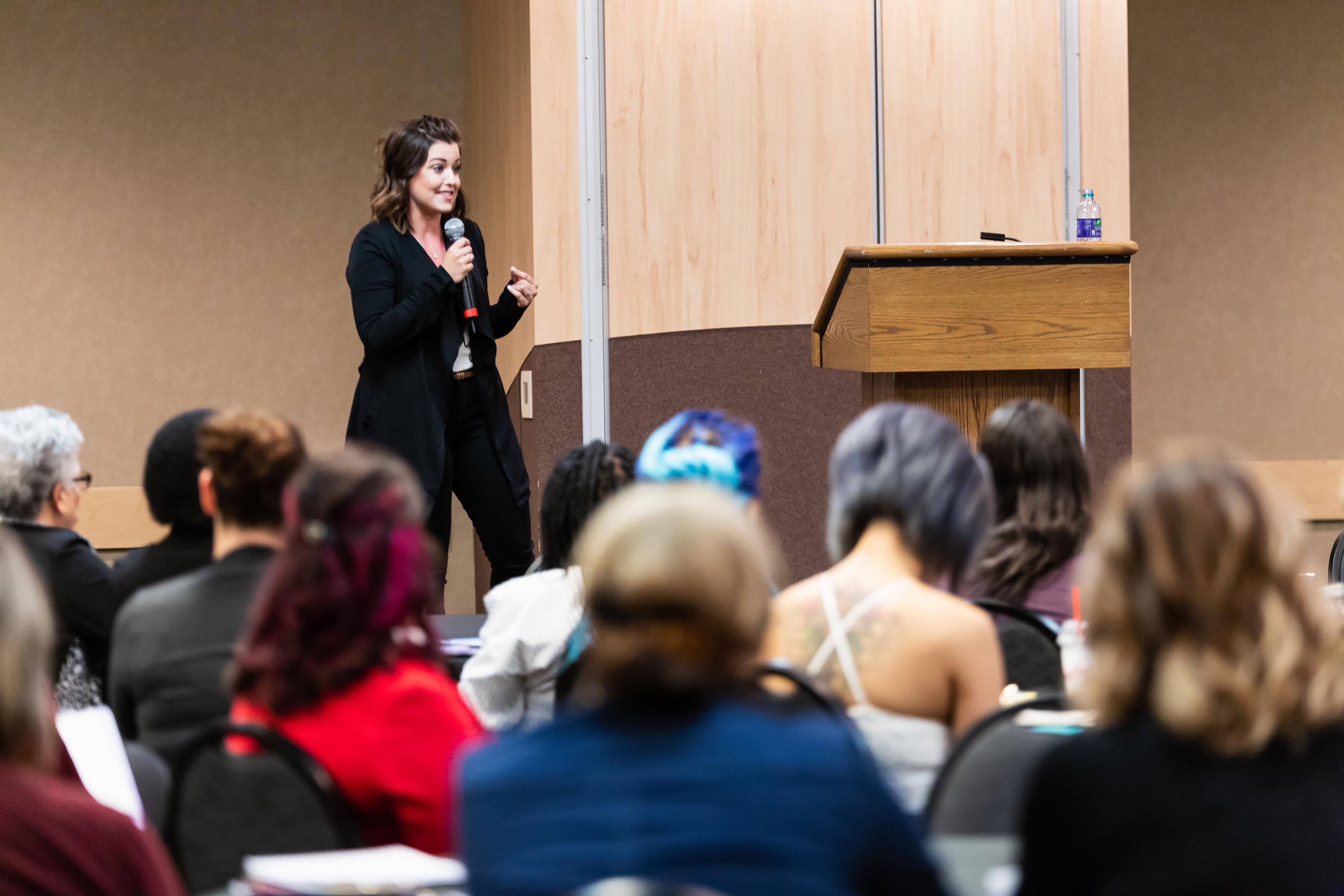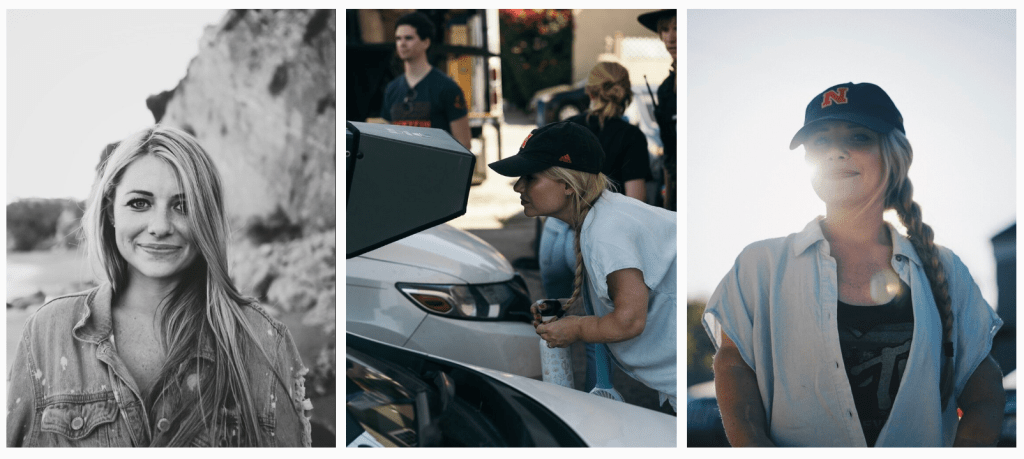
ASHLEY EAKIN ON DISABILITY, BEAUTY AND STORYTELLING: WHY HER VOICE MATTERS

© Ashely Eakin / Offcial Website of Ashley Eakin

It was 2018 when I was searching for personalities who are inspiring in a very special way. By chance, and without specifically looking for anything, I came across a video on the SoulPancake platform. On the screen, I see a woman saying the following sentence:

I am just a human and one day this body is gonna be gone.

Ashley Eakin, Filmmaker

It is Ashley Eakin who articulates these sentence. The video is a feature. A video that gives extraordinary people the opportunity to be seen. The company itself advertises with the following sentences: “The Interweb’s GOAT source for uplifting videos about what it means to be human.” At SoulPancake, the focus is on people – people who are real, unfiltered and have a story to tell.

I have decided to publish this interview as a modern 2026 feature, and not as a simple Q&A blog post – so, the interview with Ms. Eakin is a narrative, reflective blog piece that reintroduces my conversation with Ms. Eakin in a way that feels current, layered and culturally relevant. Enjoy!


THE MIRROR MOMENT

Ashley was born with a rare combination of Ollier’s Disease and Maffucci Syndrome – a non-genetic condition that affects bone growth and can lead to tumors, surgeries, and lifelong medical challenges. By 2018 when our interview took place, she had undergone +25 surgeries and survived ovarian cancer twice.

This facts show that Ashley had gone through difficult times. I still remember the medical complexity as well as something else.
She desribed walking through her life feeling “normal” – until she caught her reflection in a mirror. She says:

So, growing up I think I really tried to push the disease aside and almost ignore it. But as I matured and was able to process my disease, I have realized it has infiltrated every aspect of my life. In both good and bad. Growing up, I used to avoid mirrors because when going about daily life, I would think I had the standard body – like what I see on everyone around me, but then I would catch myself in the mirror or see a photo and remember, OH! I am different and it would almost have this devastating effect. But with each passing year, I have grown to love myself but the most dramatic shift probably happened around 2012, with the most prominent growth happening this past year“.

That moment – the collision between self-perception and external reality might probably be something many of us understand. Whether medically influenced or not, many people might be familiar with “The Mirror Moment”.
The mirror is not only glass anymore.

It is Instagram.
It is TikTok.
It is AI-enhanced perfection.
It is society.

Ashley continues:

Do not get me wrong, although I have had internal struggles with my disease – people who know me would describe me as happy and fun. I have not let my disease hold me back from pursuing my goals and I have had some amazing jobs in TV and Film that have allowed me to travel the world. Aside from a small group of people, most people who know me think I own who I am and this disease, which is true. But it is definitely been a journey to get here. I never in my life thought I would be this open on the internet. Even if you asked me two years ago, I would have never thought I would be this vulnerable.

Ashleys’s realization that “normal” body would not equal a perfect life dismantles one of the most persistent illusions of our time: that appearance determines fulfillment.

Ashley Eakin on SoulPancake – I Survived My Greatest Fear

VULNERABILITY

When Ashley decided to publicly share her story, she called it her “coming out” moment — not in the traditional sense, but in the sense of revealing what had long been hidden.

She wore a dress that showed her scars. She chose not to hide.
“I never thought I would be this vulnerable online,” she told me.

In 2018, vulnerability on the internet felt brave and unusual. But it is people like Ashley who have paved the way.
In 2026, vulnerability is everywhere – That is important. It is necessary.
But there is a difference between curated vulnerability and courageous vulnerability.
Ashley’s story was not aestheticized. It was not monetized trauma. It was a woman deciding, on her own terms, to exist fully — scars included.

That distinction matters.

BEYOND THE BEAUTIFUL FACE

Ashley revealed that some people reduce her appearance to her beautiful face. “It’s weird,” she said. “It’s a compliment. But it feeds into the idea that if I had a ‘normal’ body, my life would be perfect.”

Ms. Eakin opens up an important topic which people with disabilities unfortunately face. That sentence quietly dismantles ableism, perfectionism, and surface-level empowerment narratives all at once.

This is what Ashley’s case reveals :

Beauty can become a mask.
Compliments can become cages.
And assumptions can erase complexity.

That means, in a culture still obsessed with visual capital, Ashley reminds us that a person is not a highlight reel.

CHOOSING MAGIC – EVEN IN PAIN

What I loved during our interview is that Ashley does not romanticize suffering.

She acknowledges her pain. She acknowledges her struggles. She admits that she could focus on the negative — and it would be just as truthful.

But she chooses something else:

I do see a positive purpose. But I really have to focus on that. I could easily focus on the negative and it would be just as truthful. But I think, at the end of the day, you take away what you want. And I choose to live a life where I see magic all around us, even in pain and tragedy. Empathy is one of the most beautiful characteristics of human beings and I get to see that all the time.

Ashley Eakin

That choice is not naïve optimism. It is agency.
In 2026, where cynicism often masquerades as intelligence, choosing empathy can feel like rebellion.

And empathy, as Ashley says, is one of the most beautiful characteristics of human beings.

REPRESNTATION AND STORYTELLING

Ashley never wanted her entire creative identity to revolve around her illness. She wants to direct powerful stories — stories that connect, stories that move people, stories that expand perspectives.

That desire feels even more relevant today, as conversations about disability representation, authentic casting, and inclusive storytelling reshape the film industry.

Her journey is not just about overcoming something.

It is about who gets to tell stories.
Who gets to direct them.
Who gets to be seen.

KINDNESS IS NOT INHERENT – IT IS LEARNED

When I asked Ashley what she would wish for, one of her answers was simple:

“For people to be more kind.”and added something that still echoes today:

Hate and cruelty is not inherent. It is learned.

Ashley Eakin

She added:

SO MANY THINGS! This video went out and I contemplated a documentary, because I love stories and have heard from so many incredible people pouring their souls out. And I thought about going around and meeting these people – but truly, I do not know if I want my creative filmmaking focus to be on my own life. If the opportunity arose, I may chase that – but my main goal is to direct powerful stories that people can connect to. Not only about my own disease. I have directed a few short films and my most recent one I shot in Malaysia this summer. It is called The Details and it is really special to me. I am excited to release it soon!
For my next project, I also have as short film that is inspired by one of my favorite Shel Silverstein poems called Masks. I plan to fundraiser for it and may even include some of the people who have reached out to me through the video. It is going to be a good one!

In an era defined by polarization and digital hostility, that insight feels less like a wish and more like a call to action.

Kindness is not passive.
It is cultural work.

WHY THIS CONVERSATION STILL MATTERS

Looking back at our 2018 conversation, it was never just about illness.

It was about identity.
About visibility.
About the courage to exist without apology.

Ashley taught me that self-confidence is not a destination. It is a practice. A daily decision to focus on what is internal rather than external. To value empathy over aesthetics. Purpose over perfection.
And perhaps that is why this interview feels even more relevant today.
In a world obsessed with being seen, Ashley reminds us that the real work is in being whole.

ABOUT ASHLEY EAKIN:

Name: Ashley Eakin
Born: California
Profession: Filmmaker, Director and Advocate
Known for: Films like Single, Growing Up, Forgive Us Our Trespasses, Survive, Crazy Rich Asians


ALSO WORTH READING:

Ashley’s reflections join a chorus of voices I have previously highlighted — voices like Najwa Zebian’s, Kathy Parker’s and Funmilola Fagbamila’s — women who transform personal experience into collective impact.
MINUSCH AFONSO: FIGHTER, WARRIOR, BREAST CANCER SURVIVOR

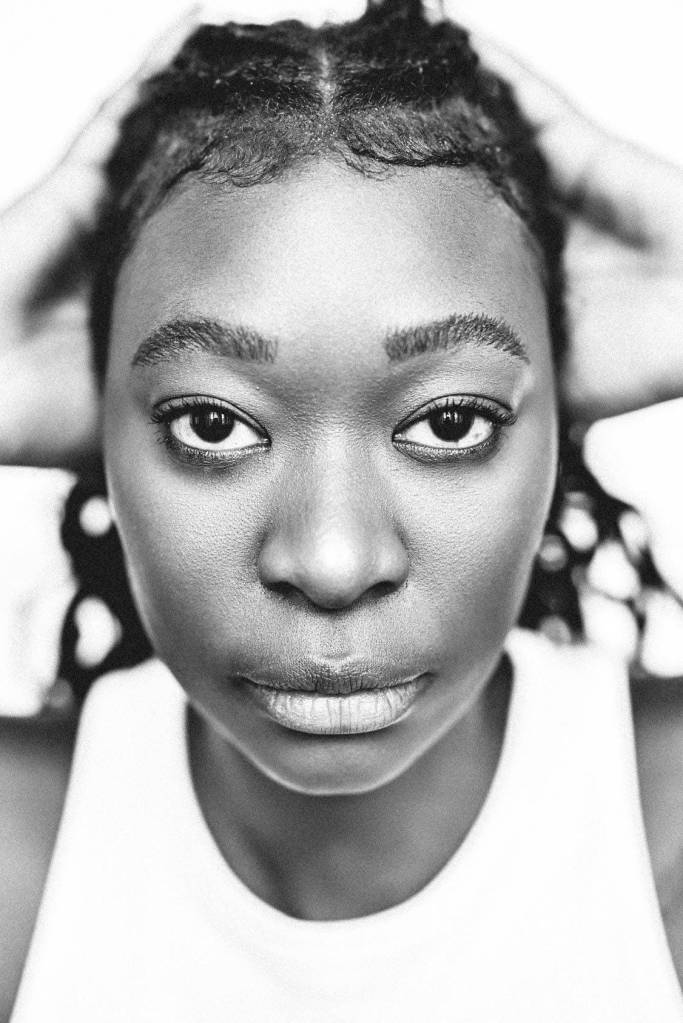
Minusch Afonso by © Max Sonnenschein

Imagine you want to spend a nice day by the lake with a friend, enjoying some quality time, and this day later turns out to be fateful. This is what happened to Minusch Afonso in 2021. Minusch Afonso is a journalist, moderator, and host in Bavaria and originally from Angola. I meet Minusch Afonso in April at my apartment in Munich to talk about that fateful day in her life. Even before the interview, I knew this conversation would be special. Not only because of the topic, but because Minusch is one of those people you find immediately likable. Here is the story of a breast cancer survivor, which aims to provide insight into what many cancer patients go through and inspire people not to give up. Thank you Minusch for your time, courage and openness!


1. Tell me about this fateful day? What kind of day was it?

Minusch: I had some discomfort in my lower abdomen that day, so I went to see a gynecologist. I was examined, prescribed medication, and everything seemed fine. I then went to the Isar River with my friend for some food and later went home. At home, I ordered some food, and when the delivery guy arrived, I opened the door. For no apparent reason, I pointed my index finger towards my breast and touched it. Just like that. It made no sense. The spot was not itchy or anything, but I just touched that spot. And then I felt a small lump and thought, “Huh, what is that?” I googled it, and usually, Google brings up really scary things, but in this case, it did not.Then, I watched a video on YouTube about how to properly examine breasts and recognize signs of breast cancer. None of the symptoms described in the video matched what I was experiencing. Sometimes, it mentioned discharge from the nipple or skin that looks like an orange peel, but I did not have any of that. So, I thought, okay, maybe it is nothing. On the other hand, I was wondering if I should go to the gynecologist again the next day, considering I had already been there. Then, I remembered I had a doctor’s appointment in Saarbrücken in two weeks and decided to bring it up then.

@abylovesblogging: Minusch went to her see her doctor and told her about her concerns and the lump she had discovered.

Minusch: I attended the appointment in Saarbrücken and told the doctor that I had felt something in my breast. She assured me it was probably nothing serious but examined the area. Having worked in a breast cancer center for many years, she was quite confident it was not anything to worry about. However, to put my mind at ease, she decided to investigate further. I had another appointment where they numbed my breast and used a long instrument to take samples from the tumor. Afterwards, I was allowed to go home. I felt conflicted and another week passed before I was supposed to call for the results.

@abylovesblogging: As if the situation was not difficult enough, Minusch had to wait for the test results. In the interview, she told me that the waiting was the worst part for her. The next day, her life changed from one day to the next.

Minusch: So, I called the next day, and they told me the result was in, and the doctor would call me later – that is when I knew something was wrong. I waited for 1.5 hours for her to call back. Those 1.5 hours were terrible because I had no idea what was going on. When the doctor called, she told me that, unfortunately, it was not as she initially thought and that the diagnosis was malignant. At that moment, everything stopped for me – I was in shock, genuinely shocked. I thought I was going to die. That was my first thought because there had never been any cancer cases in my family. Not even in my circle of friends. The only things I knew about cancer were from TV.

2. What did you do when you realised you had breast cancer?

Minusch: I called my mom and talked to friends who tried to calm me down. My mom drove from Freiburg to be with me. I really appreciated how calm she was because she usually is not that calm. Her calmness helped me stay calm, and we got through that time together. That evening, my mom and I prayed. Eventually, I went to see my gynecologist with her, and the journey felt like it took forever. In the clinic, we had to wait about 45 minutes, and the assistants looked at me with such pity because I kept going to the bathroom due to my nerves. Finally, a doctor came and said that the gynecologist had asked him to talk to me. [Minusch never saw this gynecologist again, despite repeatedly trying to reach her.] The doctor only asked me what questions I had for him.

I had the feeling as if my soul is leaving my body.

Minusch Afonso

@abylovesblogging: Once it was certain that Minusch had breast cancer, they went to the doctor and underwent examinations. She was referred to the breast centre and had to undergo various examinations such as ultrasounds, blood tests and mammograms.

3. What could have gone better on the way to your chemotherapy?

Minusch: Communication during this phase was not always clear. The thing which was so unfortunate about the doctors was that they never spoke plainly. I did not just have to deal with one doctor but with different ones and each of them said different things. That was a bit difficult.

@abylovesblogging: Although the doctors almost always assured Minusch that she did not need chemotherapy, after the surgery, it was recommended by various experts that she undergo chemotherapy.

Minusch: I took all my documents to this doctor and asked him for help. He took his time—two hours, to be exact. He explained everything to me, step by step. He also told me that I had a good chance of recovery because the tumor had not spread to the lymph nodes. Given that I got cancer at such a young age, he advised me to have a genetic test to understand the origin of the cancer. Additionally, he explained the step of mastectomy and recommended that I undergo chemotherapy anyway because I am so young. I could write to this doctor on WhatsApp if I had any questions, and that is still the case. Even though it took some time for me to trust him, I must say he did a good job.

@abylovesblogging: With her thoughts focussed on the forthcoming chemotherapy, Minusch was unfortunately given more bad news…

Minusch: One day before the chemo, I received the news that I do suffer from a rare genetic defect. My first chemo started on December 20, 2021. Normally, the chemo should last about four months, but since I did not tolerate the chemo well (poor blood values, feeling of fullness, fatigue, nausea, fatigue, and vomiting), it ended up being eight months.

I did not expect that at all

Minusch Afonso
Minusch Afonso by ©  Vera Johannsen

4. Who were you able to count on in particular during this time?

Minusch: My family was there for me and helped me as much as they could. My friends too, of course. Some of them called me via Facetime, spoke to me on the phone and tried to build me up. That was really nice to see.

5. Were you also able to draw positive things from your illness?

Minusch: Yes, very many… I had a lot of time to reflect on myself. I would say that I used to be a people pleaser and was always concerned about how others were feeling. But the illness showed me that there is only one Minusch, and there is no second, so I need to take care of myself. That is why I also learned to set boundaries, say no, and stand up for myself. If I notice something is not good for me, I now take immediate action. I was not like that before. I used to beat around the bush, procrastinate, and make excuses for people. I do not do that anymore. I do not have time to get upset because life is short. My friendships have also become closer, and I have cut some people out of my life because some friendships were toxic. Not that you would define these friendships as toxic at first glance. They were the kind of friendships that drain your energy or involve people who constantly complain. I was not aware before that such things or people were dragging me down. Cutting these people out of my life has given me so much balance. I can hardly believe it, but I have never felt so balanced in my life. Those unconscious stress factors are no longer there.

6. How has the illness changed your relationship with God?

Minusch: I have come much closer to God. I remember when I had trouble sleeping at the beginning, I called the crisis hotline, and the staff there prayed with me over the phone, which I found very comforting. They also sent me a small book about the church and Jesus. During that time, I read a lot from the Bible, even passages I did not know before… For example, I was already familiar with Psalm 120, but during that period, I read it very often because it fit my situation. I also frequently spoke with the pastoral counselor…The day I found out that I would need chemotherapy, I was angry. But I wanted to wait and see what would happen…I realized that God is always there and looking out for me. Even if it was a terrible situation, He is there the entire time. He has not left me alone. I thought about other situations in my life. Situations that were incredibly bad, where I was always supported. I was sad and angry, but the solution was always just around the corner.

7. If you had 3 wishes, what would you wish for?

Minusch: I would wish for better weather, good health and to have a beautiful and fulfilling life.

8. What tips do you have for people who are in the same or a similar situation as you were back then?

Minusch: I would also advise against googling or following certain Instagram profiles, as everyone has their own individual diagnosis. Secondly, request a consultation with doctors. And lastly, accept help. Admitting that you are ill. People often associate cancer patients with the verb ‘strong’ and I have the feeling that patients try to fulfil this. But you are ill and have cancer – that is not a cough. You can be ill and do so with a clear conscience. For example, I felt guilty about my work colleagues because I thought to myself: ‘Shit, now I cannot go to work’, but when you are ill, that is the way it is. You are allowed to be sick and recover and take the time you need and get fit. I stressed myself out to get fit again and put myself under pressure.


Find Minusch Afonso on Instagram: https://www.instagram.com/minusch_afonso/

Give abylovesblogging a Like and a Follow on Instrgram: https://www.instagram.com/abylovesblogging/

Support DKMS Germany and become a stem cell donor (Germany): https://www.dkms.de/

Support DKMS USA and become a stem cell donor (US): https://www.dkms.org/

Study on Breast cancer in Germany: https://pubmed.ncbi.nlm.nih.gov/38702333/

KELSEY NEAL – THYROID CANCER DID NOT DEFINE ME, IT CHANGED ME

35889327_10156528772068824_5324025727656394752_n
© Kelsey Neal

Please introduce yourself to my followers….

A: My name is Kelsey Neal. I am from Calgary, Alberta, Canada. I am 30 year old young. Entrepreneur, network marketing mentor and Thyroid Cancer survivor!

Q: I contacted you via Instagram after I have realized that your post have been always positive. Where do you take all the positive vibes from?

A: My positive vibes? They come from everyone around me, that vibrates good energy… you know the things that make you feel really good all around, that put a smile on your face! That kind of positivity… the little things, everyday. It can be tricky thing to maintain, but I surround myself with many things that give me gratitude, hope and inspiration. Which includes music, people and travel.

Q: You had been diagnosed with cancer and (thank God) you survived. Please, tell me ore about your journey…

A: After my diagnosis in 2015, I started to see the bigger picture of my life being painted differently. I cannot describe the feeling but all of the sudden, I felt like… I was supposed to start going in another direction that I could not control. I was going to start doing bigger things, dreaming bigger and grabbing hold of every new opportunity possible cause my time was important to me. Before thyroid cancer, life was good. I had a full time career, was working away, saving for vacations, enjoying our dog and I had a beautiful new home, I was 26 at the time and ready to start the next chapter of my life with my husband. The dreams of starting a family was in the process and then when I had my yearly physical exam, everything changed. They found cancer. They found a lump in my right thyroid bed and then after everything happened something came over me, that this was going to ALL change whether I wanted it to or not… the moment it all changed was when I woke up in the hospital, I cried and said to my family  “I am alive”.

Q: What exactly has changed in your life since your diagnosis?

A: I learned many things along the way… I learned to accept this diagnosis, it was hard. The hardest thing to ever experience, I had the “why me” moments time and time again. I slept for days, I was angry, miserable and tired (always tired). After all I was missing my thyroid, it was removed due to the cancer and it was not functioning properly anymore. For those who do not know, your thyroid controls so much of your body and brain. It controls the hormonal system, which also includes energy levels, emotions, metabolism and so much more. My thyroid was removed, and now I live on medication for the rest of my life, to ensure the hormone levels are balanced as best as possible. This is a tricky act. I have an invisible illness, that does not define me and my good days have finally began to outweigh the bad. After learning to accept this diagnosis and grieve the loss of my organ. I began to slowly, but surely get out of this lifeless body and start turning my thoughts into positive vibes only. At the time of my journey, I was experiencing hair loss, hair thinning and my confidence was dwindling. I stumbled across a company that could help me with those challenging experiences. I am grateful that I learned to say “Yes” to new things, cause if I did not I may be on a different path. I am now a top leader in my industry, helping those who struggle with this illness, hair loss and help other discover their self worth. I am motivational speaker now, something I always dreamed of doing, but did not feel I had a story of my own to share… and well… Now I do. Who knew right?! I learned to take risks, because.. What is the best thing that could happen!

Q:  What would you advise people who are going through a difficult time ? What helped you while you had cancer ?

A: The best advice I can share with someone who has been recently diagnosed with Thyroid cancer or any type of illness, is that….Never forget where you came from, hold your past life close to you. Because moving forward you will become someone brand new and different but always carry those special moments, childhood memories and experiences of your previously life near and dear. All the sweet times, all the laughter, all the joy and love that brings you life… hold it close and never let it go. This will help you with your dark times, your struggles and challenges that you will face. Remember your younger days, your past life experiences (the good ones) and embrace the new you. It is like a second chance to have anything you want, do anything and BE anything without having any commitment to others opinions, any other negativity that was once drawn into your life. During my journey for example, I attended Young Adult Cancer retreats and also had the honor to facilitate one of my own. I surround myself with like minded people going through similar experiences. I connected myself to social media, woman from all over the world facing this thyroid illness that felt uncontrollable to them too. I felt safe talking to people who had been there. Family and friends supported me in a different way, they offered so much love and care. I am thankful to have let my family in during these times. Hold them close and do not be afraid to open up and be vulnerable with the world, this is where the magic can happen and you start to know your worth and place in life, even during the worst times. A little piece of you, still remains hopeful and strong. NEVER LET IT GO!

Q: Is there anything you would have done differently since your diagnosis? If yes what and why?

A: There is absolutely nothing I would change about this diagnosis and illness. Not one thing! Why? Because it is lead me to the person I am today. This was my path, it was chosen for me for a reason. Thyroid cancer was a blessing in disguise. Remember earlier you asked me about my life before this illness and what I was doing… well now since then.. I have climbed mountains I never thought I could. I have had more obstacles during this time, than anything I ever experienced in my life, and after all obstacles and hurdles are the path to success and fulfillment.  I have travelled alone and only told a select few about it and will continue to travel to soak it in while I still can. I have dug deep to what it is I want in my life moving forward. I have taken risks, opened new doors, closed old ones, let go of anything that has not helped me grow which includes relationships, people, jobs, places and more. I see life now in a different lense and my time is so valuable to me. You go through big chunks of time in your life, when you think this is impossible… I can not do this anymore… but then you keep going and just keep going… and all of the sudden you sort of do the possible!

If you had 3 wishes free – what would that be ?

A: 3 wishes? Hmmm…. Wow.. I have not been asked that type of question, since I was little
1. I wish that I could connect with everyone… there are so many beautiful, unique people in the world with so many stories.. All backgrounds, all walks of life… getting to know people and being open to new connections.. Gratitude, it is the memory of the heart!

2. I wish I could meet my musical Idol Michael Jackson! I have been a fan since I was little his voice, song and dance has inspired in my aspects of my life. Raw, real talent and his lyrics are moving. He was a big influence to many around the world. I wish I could have had the chance to see him in concert.

3. I wish for more time. Unfortuantely, I cannot control this. But if I could… give me more time. I am not talking about the 24 hours in a day like for work.. I make sure I balance this clock and use my time with intention. I am talking about… when your in a moment, experience or place.. And you just wish you had “a bit more time”… like when your on a hot beach and it is the last day of vacation! That  kind of time… a snap of my fingers and I could lay there just a few more days in the sun !

FIND KELSEY NEAL ON FACEBOOK

_ _ _ _ _ _ _ _ _ _ _ _ _

Dear Kelsey,

I am glad to get to know such a inspiring person as you are. I am sure that this interviw will open eyes and change some people’s point of view. It was a pleasure interviewing you. Your answers definitely have an impact on me. Thank you so much for your time. You are an inspiration to me and I am glad to have had you as my interview parter. You deserve nothing but the BEST.