

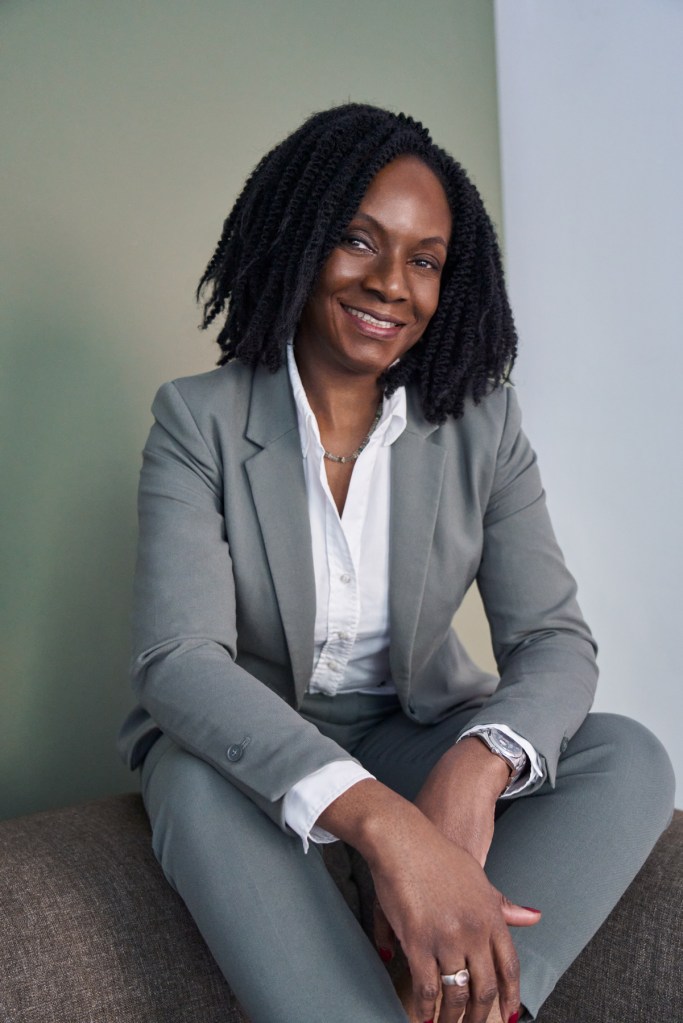
What does it mean to be the first? To walk into rooms where no one looks like you, to lead where others only followed, and to speak truths that are too often silenced? Florence Brokowski-Shekete has done just that — and more. As the first Black female school superintendent in Germany, Florence’s journey is not just about personal success; it’s about challenging systems, embracing identity, and refusing to let injustice go unspoken. In this candid and moving interview, Florence opens up about her childhood between cultures, the quiet strength of motherhood, and the battles she’s fought — and still fights — in a society that too often turns a blind eye to its own biases. From painful discrimination to empowering leadership, she shares stories that are as raw as they are inspiring. Curious what drives a woman who says she wants to be “the Oprah Winfrey of Germany”? Keep reading — this is not a story you want to miss.
@abylovesblogging: Please briefly introduce yourself – what do you do, what are your interests?
Florence: First of all, thank you for meeting with me today. My name is Florence Brokowski-Shekete, and I’m an educator by profession. I studied to become a teacher, worked as a teacher and principal, and today I serve as a school supervision director in a public school office. My parents came from Nigeria to Germany in the mid-1960s. I was born in Hamburg and grew up with a white German foster family. When my parents returned to Nigeria, I was nine years old – and I had to go with them. That was a huge change for me, as I didn’t feel comfortable in Nigeria because I missed my mom terribly and didn’t have a close bond with my biological parents, since I hadn’t grown up with them. Luckily, after three and a half years, I was able to return to Germany and live with my mom again. I grew up in Buxtehude in northern Germany. But even then, I noticed that due to my Nigerian passport, many things were denied to me, and I constantly faced resistance and problems. Later, my mom adopted me as an adult, which allowed me to get a German passport and study to become a teacher. I followed my professional path, which wasn’t always easy and had its rough patches. I wasn’t walking around thinking that life was hard because I’m Black – not at all. But whether you want to or not, there are moments when you realize you’re facing resistance. Of course, people always asked where I came from and what my background was. When I shared my story, they often told me I should write a book – and that’s how it came about that I published my autobiography in 2020, followed by the book “Raus aus den Schubladen! – Meine Gespräche mit Schwarzen Deutschen” in 2022, and in 2024, the first season of my podcast was released as a book. The idea for the podcast came to me in 2022 – I wanted to talk about everyday racist situations. I brought in a white person for the dialogue because I thought it would make a good dynamic – which worked well for six seasons.
@abylovesblogging: What exactly was the problem in Nigeria? Can you give me some examples?
Florence: Yes. In Nigeria, I was considered “the white one.” Because I had been raised in a completely different culture, I was brought up white. The kids there called me that too – in Nigeria, there’s a term, “Oibo Pepe,” which is used for white people, and that’s what they called me. But I don’t know if that was the main reason. The main reason was that I missed my mom. If I had gone somewhere and she had come with me, it wouldn’t have been a problem at all. I love traveling and being abroad. I’m very curious and enjoy exploring other cultures. But in Nigeria, I was a child missing her mom, and that’s why I didn’t feel comfortable there. My biological parents were strangers to me. They didn’t have the kind of love for children that I knew.
@abylovesblogging: Do you think there’s a cultural aspect involved?
Florence: Definitely. I do think there’s a cultural aspect. When I compare it: my white mom was born in 1924, and my parents were 20 years younger than her. You could say, if it were about generational differences, my mom would have been the one who was a bit colder and less loving. But I think it has something to do with culture. I’ve heard the same from others – that, compared to Germany or to what we generally know, the way parents express love there can feel cold. I always said, once a child can walk, it can work – that’s the feeling I had in Nigeria. If you can’t walk yet, you get carried on the back, and that’s okay, but once you can walk, you’re expected to be useful. I really missed warmth – maybe it was something specific to my mother.
@abylovesblogging: How did you manage to walk this path despite these experiences? What helped you?
Florence: I came to my mom when I was two, after being in various foster homes. I’d say, luckily, my biological parents had very little influence on my upbringing. Because I came to my mom so young and was showered with love – I really had everything a small child needs. My mom didn’t have much money, and my parents eventually stopped giving her any to support me. She took it all upon herself. And with the little money she had, she tried everything to give me a nice childhood. […] My first Christmas – I had come to her in February – she made a dollhouse out of a shoebox: an apartment with two little dolls. She didn’t even know if I would play with it or not. […] She did it with so much love – and that was my life’s luck. Those seven years gave me so much love for life that the three years I spent in Nigeria had barely any impact on me. [….] Compared to my sister, I got off lightly. But my parents had a different method, especially my mother. When they thought I needed to be punished, they’d say I wasn’t allowed to write to Germany anymore and wouldn’t get my letters. A teacher who supported me helped me return to Germany. Those 3½ years definitely didn’t leave me completely unscathed. For the first two years afterward, I needed a lot of time to develop basic trust in people. But I always say, everyone carries their own little burden – and those seven years with my mom gave me a healthy self-image. So, I didn’t miss the love of my biological parents, because I had a mom who loved me […].
@abylovesblogging: How did this experience shape you as a mother?
Florence: Not in a negative way at all, really not. My mom showed me what it’s like to be loved as a child. And I realized very early on (and that might sound really stupid now, but I don’t know why I wanted that as a child), but whenever we went to the zoo (let’s skip the discussion about whether zoos are good or not, but back then it was still a thing. In Hamburg there’s a zoo/animal park and in the ape house there were always the little baby chimpanzees, and they were always diapered like children and so on). And for some reason, as a child I always said that I wanted a little monkey. Maybe because they looked so small and cute. And then I was showered with stuffed monkeys and always cried because I wanted a real little monkey. I think I just wanted something I could love and give love to. When I had my son and I heard in the maternity class that you have to get used to the child once it’s there – and I thought: What nonsense! I already loved my child… I loved this little being before he was even born. So thank God those 3½ years with my parents had no influence on how I treated my baby. I’d say those 3½ years in Nigeria, regardless of my parents, made me a multicultural person. That wasn’t so bad, because otherwise I wouldn’t have any connection to my skin color and my Blackness, so from that perspective it was good. I really realized what it’s like to live in Nigeria as a Black person and be seen as white. […].
@abylovesblogging: What challenges do you see in the future in Germany regarding racism, and how can they be overcome?
Florence: The future is a good question. I do see that there are many people in our society who are open and say they don’t know much about everyday racism but want to learn and be open and do better. They are aware that there are everyday racist and discriminatory situations. People who consciously say that everyone has the same human rights, and we want to do things differently. You can also see that now: People are going out and demonstrating for democracy.
But I also see the people – and I see them in my work environment (though that’s probably a coincidence, because my work environment also reflects society… so I think it’s a societal phenomenon) – who say they’re fed up with the whole diversity debate. People who, like the Tradwives, are regressing and becoming conservative again – I get the impression there are people who are completely conservative. They don’t even want to touch the topic of diversity. I work in an environment where the topic „diversity“has not deeply thought of. There are still people who can‘t connect to this topic.
I had predicted earlier that we need diversity management. At first, I thought “then I’ll just leave it”, but then I thought “No”. I was specifically appointed by the Minister of Education in Baden-Württemberg to the state school advisory board for this topic, and then I can’t just say in my work environment: “Oh, never mind, it’s not that bad.”
If the leadership of a company, institution, or organization doesn’t address such topics, and no one says “Wait a minute,” then it gets lost. And if the leadership rolls their eyes at the topic, then the people affected feel excluded – and that just can’t happen in 2025 anymore.
I’m no longer willing to just accept it. That’s what I observe here and there, but I believe we people who care about this – and that’s not just Black people, but people who are gay, have a different gender identity, etc. – we have to speak out. That doesn’t mean I know all aspects of diversity… maybe I know them on a meta level. I don’t have to like everything, but that’s not the point. The point isn’t to say: “Oh, having a migration background is okay, but if someone is gay, their feelings aren’t valid.” That’s not it. Human rights mean that everyone must be accepted in their individuality, whether I like it or not. That’s the kind of topic where I feel we’re not yet at a point where acceptance is strong.
@abylovesblogging: How can you deal with this fear? Do you have any tips?
Florence: That’s a tough question, because kids and teenagers spend so much time on the internet and on social media. They’re exposed to so many images, “realities”, and truths, that I’m sometimes not surprised if they struggle to deal with it. I’d say home should always be the source where I can express my fears, worries, and concerns. Home or with loved ones, and of course school should also be a place – but first and foremost, home.
For example, when the war in Ukraine started, it turned out that many Black students (which I didn’t even know before) were unable to leave Ukraine. I didn’t know there were so many Black students there. The fact that they couldn’t get out properly – that’s something deeply shocking. There were probably teens who saw that and thought, “What if I had been there – would I have been just as powerless?” So it’s good to talk with parents and look at how situations were resolved. In some areas, return tickets were even given away – I meet people from that party and weirdly enough, they’re sometimes super friendly to me. I have no idea why.
One time, I was in a meeting and afterward, one of them passed by me and wished me a nice day – like it was super important to him. And I just thought, “Huh? What do you want from me?” I just thought, it’s already enough that I have to breathe the same air as this person. But that’s how they try to instil fear. The more you engage with it, the more it affects you.
@abylovesblogging: Are there moments that especially shaped you? If so, which ones?
Florence: For example, when I did my second state examination, I felt discriminated against by the examination board and the head of the seminar. The way she spoke to me… she handed me my certificate and said, “Your competence is worth that of a cleaning lady.” Then the person who supervised my seminar paper, the one I followed for guidance, was later criticized – and it affected my grade. I confronted him, but he wouldn’t even look at me. It was all very unfair. I always had to deliver more than everyone else. I spent two years at a primary school and that was good – no problems with the kids or parents. Then I was self-employed for six years, which was also lovely. Then I went back to teaching at a schoolwhere I had the strange feeling that the male principal doubted my qualifications. But of course, and again I proofed him wrong.
I think he had issues with his masculinity. And I’m someone who doesn’t fawn over men like that – I’m professional and do my thing.So when he saw that I was capable, the dynamic changed. Suddenly I was “the teacher”, and when I became a principal, he proudly visited me at the school with flowers like “my teacher is now the principal”. But I had to first prove myself and show that I wouldn’t be treated like that.Then someone at that school cut up my jacket – everyone initially said it must have been kids. But I knew immediately it was a colleague. Years later, another colleague said: “You know, we all knew it wasn’t kids, and we also knew who it was, but we were too scared to say anything.”
And in such situations, no one helps. I wrote about it in my book too – the police were involved. One officer told me not to make such a fuss, it was just a jacket. It was all very degrading. My former boss, who hadn’t even read the book, heard that someone told her she’s portrayed as a racist in it and messaged me on Facebook. But I actually portrayed her as someone who supported me in advancing my career. So I replied: 1. She hasn’t read the book. 2. If that’s her only concern, then I’m sorry I phrased it so gently – next time I’ll give different interviews and be more direct. I mean, she asked for it! If she wants it, she can have it. Since then, I’ve blocked her and cut off contact.Those are the situations where I think – it’s not enough that I’ve been harmed, but I’m also expected to protect the perpetrators’ reputation. Then I applied to be a school principal, and there were plenty of people trying to block me. But there was one woman, the then-head of the school authority, and she said she wanted me as a principal and gave me full support. And the guys – mainly men – who tried to block me, had to work with me when I became a school inspector. One of them had to work with me – that really annoyed him. Eventually I had to put him in his place, because he thought he could cross my boundaries. And there’s still one guy who has to work with me to this day. Totally awful, but I think I show him how it’s done. These are the people who think I didn’t know they were against me.
@abylovesblogging: Do you think all of this happened to you because you’re a woman and a PoC?
Florence: Absolutely yes. Last year I faced a situation which clearly showed that my skin colour mattered. If this situation had involved a tall, white, blond, blue-eyed man, people would have also disagreed with the decision, they wouldn’t have dared to play the same games they played with me. I hold that very much against people – and I was asked: “You’re not resentful, are you?” – Yes, I am. I can handle it professionally, because I believe you always meet twice in life […] I think it happened because I’m a woman and a PoC – that’s where intersectionality comes in.
@abylovesblogging: How do you experience this? Do you notice an “elbow mentality” among Black women in the community?
Florence: […] I remember this from my university days. At the university I attended, there was a Black woman with a white parent who ignored me, like I didn’t exist. Only when I had braids did she suddenly approach me and talk about how great the braids looked and where I got them done. I hear from time to time that there is something like jealousy in the Black community. Like I said, I don’t feel it personally. On social media, sometimes Black people write to me asking why I talk to white people and that I’m too white. But I just ignore that.
If people have a problem with it, then they can unfollow me. But because of things like that, I try to live slightly different. My son also wants me to help other BiPocs.
I get a lot of requests from young Black women, like your request (she meant mine), and when I tell my son about it, he says, “You’re going to do that, right?” or “That’s so nice that you’re doing that.” For me, that’s a given. […] David Bowie’s wife once said in an interview something like: I opened a lot of doors, and I always make sure that the door stays open for the people who come after me. I really like that. […] That’s why I love supporting young Black women/men.
@abylovesblogging: If you had 3 wishes, what would they be?
- My first wish would be that my son and I stay healthy and that nothing happens to us – especially him. That nothing happens to him and that he’s happy and content. That’s the most important thing to me. That we can grow old together in the sense that he has a mom who ages but stays healthy.
- That society becomes more content again and that politics develops a good instinct to help people feel safe. Because right now, I feel that politicians lack the right instinct to ensure that people living in this country respect it. It shouldn’t be that we constantly experience situations like we have recently. That has nothing to do with whether someone has a migration background or not. If you live in this country, I expect you to have respect for it. It’s like in a family or a class: I can have a certain loving strictness, which means I show the children I like and respect them, but there’s a boundary – and if someone crosses it, there are consequences.
That’s what I wish, because if it doesn’t happen, we might face political consequences tomorrow […]. - My third wish – which I’ve had for a long time – is to have my own talk show. I have my talk format “SCHWARZWÄLDER & BUTTERKUCHEN” because I love it – I love talking. […]
That would still be a wish: I want to become the Oprah Winfrey of Germany. We have some well known hosts and I really like them.. I was on the NDR talk show twice, and I really love all of them.. I’d love to be the Oprah Winfrey of Germany, because I think I’d be good at it. My talks are also on YouTube – they’re not sensationalistic, but solid. I think the German TV program could really use a solid talk show again.
Visit Florence’s website: https://fbs-icc.com/ueber-mich/
Find Florence on LinkedIn: Florence Brokowski-Shekete
 abylovesblogging.com