On International Women’s Day, we don’t only celebrate achievements. It is also a moment to reflect on the responsibility we have toward one another—especially as women, both in our professional lives and in our personal lives.
True strength is not shown by holding others back. It is shown by creating space—space for ideas, for growth, and for different personalities to thrive.
Women in positions of influence have a unique opportunity. They can use their voice and their position to create something meaningful. To support younger women who are just taking their first steps, trying to find their place, their confidence, and their path. Sometimes, small gestures make the biggest difference: honest feedback, mentorship, encouragement, or simply being someone who listens.
Empowerment also means creating environments where people feel respected and safe to grow. This message is especially for the women who consciously work to build workplaces where employees do not wake up in the middle of the night with panic attacks at the thought of having to return to work the next day. Leadership should never create fear or emotional distress.
It is also a moment to reflect on how we treat one another. Power should never be used to make other women feel like they are never enough—never capable enough, never worthy enough. True leadership does not diminish others; it lifts them, encourages them, and allows them to grow.
ALSO INTERESTING: Looking for inspirational stories of women I have interviewed so far? What about Najwa Zebian who uses her voice to speak for the silenced? Or, the story of Megan Faicloth, who studied at Stanford after being homeless for several months? And, Ashley Eakin who challenges the traditional film industry and advocates for diversity and visibility? Enjoy!
Empowerment also means embracing diversity among women. Not every woman is the same—and that is a strength. Different personalities, perspectives, and ways of approaching life enrich our communities and our workplaces. No one should be dismissed or belittled simply because she is different.
Empowerment does not only begin in the workplace; it begins at home as well. With the women who dedicate themselves to raising children, teaching them values, empathy, and strength so they can grow into thoughtful and compassionate people.
And beyond work and family, it lives in our friendships too. True friendship is built on loyalty, respect, and genuine support. It means celebrating each other’s successes, standing by one another during difficult times, and creating a space where everyone feels valued and heard.
When women uplift each other with sincerity and respect, we create communities built on trust rather than competition.
Women supporting women is not just a phrase. It is a choice—one we can make every day.
It was 2018 when I was searching for personalities who are inspiring in a very special way. By chance, and without specifically looking for anything, I came across a video on the SoulPancake platform. On the screen, I see a woman saying the following sentence:
I am just a human and one day this body is gonna be gone.
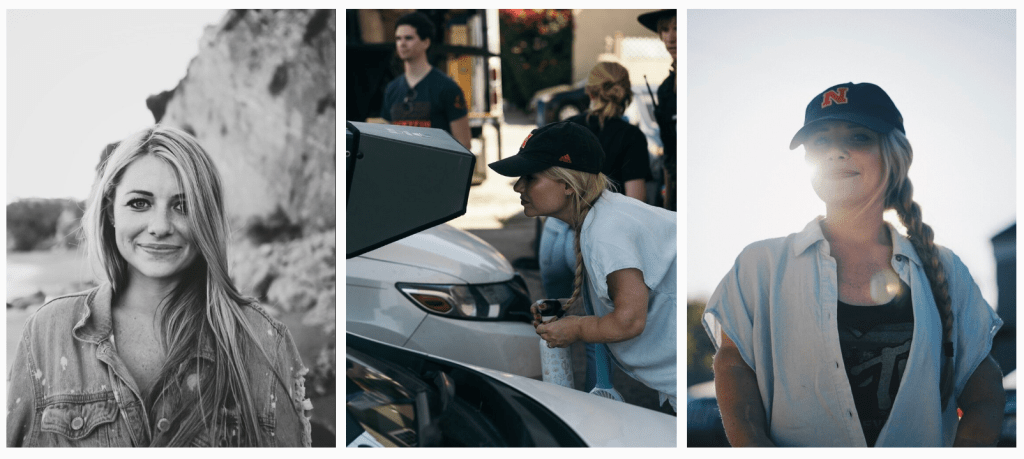
Ashley Eakin, Filmmaker
It is Ashley Eakin who articulates this sentence. The video is a feature. A video that gives extraordinary people the opportunity to be seen. The company itself advertises with the following sentence: “The Interweb’s GOAT source for uplifting videos about what it means to be human.” At SoulPancake, the focus is on people – people who are real, unfiltered and have a story to tell.
I have decided to publish this interview as a modern 2026 feature, and not as a simple Q&A blog post – so, the interview with Ms. Eakin is a narrative, reflective blog piece that reintroduces my conversation with Ms. Eakin in a way that feels current, layered and culturally relevant. Enjoy!
THE MIRROR MOMENT
Ashley was born with a rare combination of Ollier’s Disease and Maffucci Syndrome – a non-genetic condition that affects bone growth and can lead to tumors, surgeries, and lifelong medical challenges. By 2018 when our interview took place, she had undergone +25 surgeries and survived ovarian cancer twice.
This facts show that Ashley had gone through difficult times. I still remember the medical complexity as well as something else. She desribed walking through her life feeling “normal” – until she caught her reflection in a mirror. She says:
“So, growing up I think I really tried to push the disease aside and almost ignore it. But as I matured and was able to process my disease, I have realized it has infiltrated every aspect of my life. In both good and bad. Growing up, I used to avoid mirrors because when going about daily life, I would think I had the standard body – like what I see on everyone around me, but then I would catch myself in the mirror or see a photo and remember, OH! I am different and it would almost have this devastating effect. But with each passing year, I have grown to love myself but the most dramatic shift probably happened around 2012, with the most prominent growth happening this past year“.
That moment – the collision between self-perception and external reality might probably be something many of us understand. Whether medically influenced or not, many people might be familiar with “The Mirror Moment”. The mirror is not only glass anymore.
It is Instagram. It is TikTok. It is AI-enhanced perfection. It is society.
Ashley continues:
“Do not get me wrong, although I have had internal struggles with my disease – people who know me would describe me as happy and fun. I have not let my disease hold me back from pursuing my goals and I have had some amazing jobs in TV and Film that have allowed me to travel the world. Aside from a small group of people, most people who know me think I own who I am and this disease, which is true. But it is definitely been a journey to get here. I never in my life thought I would be this open on the internet. Even if you asked me two years ago, I would have never thought I would be this vulnerable.“
Ashleys’s realization that “normal” body would not equal a perfect life dismantles one of the most persistent illusions of our time: that appearance determines fulfillment.
Ashley Eakin on SoulPancake – I Survived My Greatest Fear
VULNERABILITY
When Ashley decided to publicly share her story, she called it her “coming out” moment — not in the traditional sense, but in the sense of revealing what had long been hidden.
She wore a dress that showed her scars. She chose not to hide. “I never thought I would be this vulnerable online,” she told me.
In 2018, vulnerability on the internet felt brave and unusual. But it is people like Ashley who have paved the way. In 2026, vulnerability is everywhere – That is important. It is necessary. But there is a difference between curated vulnerability and courageous vulnerability. Ashley’s story was not aestheticized. It was not monetized trauma. It was a woman deciding, on her own terms, to exist fully — scars included.
That distinction matters.
BEYOND THE BEAUTIFUL FACE
Ashley revealed that some people reduce her appearance to her beautiful face. “It’s weird,” she said. “It’s a compliment. But it feeds into the idea that if I had a ‘normal’ body, my life would be perfect.”
Ms. Eakin opens up an important topic which people with disabilities unfortunately face. That sentence quietly dismantles ableism, perfectionism, and surface-level empowerment narratives all at once.
This is what Ashley’s case reveals :
Beauty can become a mask. Compliments can become cages. And assumptions can erase complexity.
That means, in a culture still obsessed with visual capital, Ashley reminds us that a person is not a highlight reel.
CHOOSING MAGIC – EVEN IN PAIN
What I loved during our interview is that Ashley does not romanticize suffering.
She acknowledges her pain. She acknowledges her struggles. She admits that she could focus on the negative — and it would be just as truthful.
But she chooses something else:
I do see a positive purpose. But I really have to focus on that. I could easily focus on the negative and it would be just as truthful. But I think, at the end of the day, you take away what you want. And I choose to live a life where I see magic all around us, even in pain and tragedy. Empathy is one of the most beautiful characteristics of human beings and I get to see that all the time.
Ashley Eakin
That choice is not naïve optimism. It is agency. In 2026, where cynicism often masquerades as intelligence, choosing empathy can feel like rebellion.
And empathy, as Ashley says, is one of the most beautiful characteristics of human beings.
REPRESNTATION AND STORYTELLING
Ashley never wanted her entire creative identity to revolve around her illness. She wants to direct powerful stories — stories that connect, stories that move people, stories that expand perspectives.
That desire feels even more relevant today, as conversations about disability representation, authentic casting, and inclusive storytelling reshape the film industry.
Her journey is not just about overcoming something.
It is about who gets to tell stories. Who gets to direct them. Who gets to be seen.
KINDNESS IS NOT INHERENT – IT IS LEARNED
When I asked Ashley what she would wish for, one of her answers was simple:
“For people to be more kind.”and added something that still echoes today:
Hate and cruelty is not inherent. It is learned.
Ashley Eakin
She added:
“SO MANY THINGS! This video went out and I contemplated a documentary, because I love stories and have heard from so many incredible people pouring their souls out. And I thought about going around and meeting these people – but truly, I do not know if I want my creative filmmaking focus to be on my own life. If the opportunity arose, I may chase that – but my main goal is to direct powerful stories that people can connect to. Not only about my own disease. I have directed a few short films and my most recent one I shot in Malaysia this summer. It is called The Details and it is really special to me. I am excited to release it soon! For my next project, I also have as short film that is inspired by one of my favorite Shel Silverstein poems called Masks. I plan to fundraiser for it and may even include some of the people who have reached out to me through the video. It is going to be a good one!“
In an era defined by polarization and digital hostility, that insight feels less like a wish and more like a call to action.
Kindness is not passive. It is cultural work.
WHY THIS CONVERSATION STILL MATTERS
Looking back at our 2018 conversation, it was never just about illness.
It was about identity. About visibility. About the courage to exist without apology.
Ashley taught me that self-confidence is not a destination. It is a practice. A daily decision to focus on what is internal rather than external. To value empathy over aesthetics. Purpose over perfection. And perhaps that is why this interview feels even more relevant today. In a world obsessed with being seen, Ashley reminds us that the real work is in being whole.
ABOUT ASHLEY EAKIN:
Name: Ashley Eakin Born: California Profession: Filmmaker, Director and Advocate Known for: Films like Single, Growing Up, Forgive Us Our Trespasses, Survive, Crazy Rich Asians
ALSO WORTH READING:
Ashley’s reflections join a chorus of voices I have previously highlighted — voices like Najwa Zebian’s, Kathy Parker’s and Funmilola Fagbamila’s — women who transform personal experience into collective impact.
Sometimes, life feels like a roller coaster — full of highs and sudden drops. In moments when we feel overwhelmed and struggle to put our emotions into words, encountering voices like Najwa Zebian can make all the difference.
I still remember the first time I read one of her quotes. Something about her words felt deeply familiar, as if she had captured emotions I could not explain myself. At that time, I was going through a painful heartbreak when I came across this quote:
They do everything to dim your light, and then they ask you why you’re not shining.
Najwa Zebian, The Nectar of Pain
The more I researched Ms. Zebian’s work, the more I realized that she is far from an ordinary author. I became deeply interested in learning more about her, so I took a chance and sent her an interview request.
To be honest, I didn’t expect her to reply. I assumed she probably receives countless requests from different people, and @abylovesblogging was (and still is) just a hobby of mine.
But sometimes, life surprises us. Najwa actually replied and agreed to be interviewed by me. I could not believe it — I was so happy! Here is the shortended version of our interview from 2017.
1. @abylovesblogging: You wrote two beautiful books – tell us more about the topic of your books ..
Najwa Zebian: My first book, Mind Platter, gives a voice to those who need one, offers a crying shoulder for those who need someone to listen, and inspires those who need a reminder of the power that they have over their lives. Published in the same year, my second book, The Nectar of Pain, is a collection of poetry and prose that the pain of love and loss gave birth to.
2. @abylovesblogging: What was the reason you wanted to write a book? And what or who inspired you to do so?
Najwa Zebian: I never intended to write a book before I published Mind Platter. Those were my daily reflections that I shared with a few people who told me that I needed to compile my work and publish it. I am glad I did. As to my inspiration, it was daily life and reflection.
@abylovesblogging: What is your favoured topic writing about? And why ?
Najwa Zebian: I write quite a bit about silence, but I do not have one specific topic that I favor. I write about silence because it is a universal language that holds so much power.
3. @abylovesblogging: What or who is the main inspiration for you personally ? And why ?
Najwa Zebian: I have many people and things that inspire me. It is hard to pinpoint. I just am a very reflective person. Anything that catches my attention and gets me thinking could be inspirational to me.
4. @abylovesblogging: When did you decide to become an author or to start writing ?
Najwa Zebian: Writing was a part of my life since I was thirteen. I stopped from the age of 16, when I arrived to Canada, till the age of 23. At 23, I started teaching, and that is when I started writing again as I was inspired by the similarities between my experience coming here and that of my students at the time.
5. @abylovesblogging: What would you like to change in this world if?
Najwa Zebian: Of the many things I aspire to change, I would like to empower others to speak up about what they are going through and to feel that their voices matter. I would like the world to have more empathy and more understanding of vulnerability, belonging and connection.
6. @abylovesblogging: Could you imagine, waking up some day and doing something different than being an author? If yes you what would like to do?
Najwa Zebian: I will always be an author as I have published two books already, but to wake up without writing? No.
7. @abylovesblogging: What exactly do you want to achieve with writing?
Najwa Zebian: I want to give a voice to the silenced souls out there.
If you are drawn to stories of healing and resilience, you might also find inspiration in my interview with Kathy Parker, who shares her own journey from pain to healing. Voices matter — whether they speak about healing, the self or challenging society. If you’re interested in another powerful voice, I also interviewed Funmilola Fagbamila, a scholar and activist who plays a leading role in the Black Lives Matter movement. Beyond authors and poets, I also love speaking to people like Holger Birnbräuer, who has successfully climbed theEverest. And let me know who your favourite author is and why in the comments!
I first came across Megan Faircloth’s story around 2017 when I watched a TV show. I immediately knew that I wanted to share her story on my blog. Since our interview, I am grateful to call Megan my “friend from afar“. Even though we have never met in person, we have stayed in touch ever since. Please read this incredible story and share it as much as you can.
GROWING UP IN POVERTY: WHEN HOME WAS NEVER SECURE
@abylovesblogging: Please, tell us about what you and your family had been through because of your homelessness….
Megan: My family began to have financial struggles during my middle school years. We were evicted from several homes and I moved schools a lot. Finally, in my eighth grade year, we were evicted from another house and we had nowhere else to go, so we moved into an abandoned house in Wendell, North Carolina. My father knew the owner of the house and the owner of the house owed him money, so the owner allowed us to stay there, though the house was pretty uninhabitable. There was a hole in the roof of the kitchen where water leaked in every time it rained. There was also a hole in the floor in the room where me and my sisters slept. There was no heat or air conditioning in the house. And even though my parents did not have to pay rent, we continued to struggle financially. We could not afford the water bill, so the house did not have running water most of the time, and we often went without electricity. […] Then tragedy struck. The owner of the home died, and his wife did not want us living in the abandoned house anymore, so we were evicted. We were only given 24 hours notice before we had to leave the property, as the owner’s wife lied to the police about how long we had been living in the house (In America, the longer you are living in the house, the longer you are given to collect your stuff and leave. Legally, we should have been given a month to pack and leave, but the owner’s wife told the authorities that we had only been living there a week so that she could evict us quickly). As a result, we lost most of our belongings. I made off with my bookbag and my textbooks, a bag of my clothes, and a box of my journals- which to this day are my most prized possession. […] I was taking 4 college courses when most students at my school only took one or two because the classes were so difficult.The counselor at my school had warned me at the beginning of the school year that my course load would be too difficult, but I told her I wanted to do it no matter how hard it was. Even before becoming homeless, I was determined to get out of poverty through my education. The same week of the eviction, my mother was admitted to the hospital and diagnosed with an ovarian tumor. We did not find out until two months later that it was not cancer, and so for a long time me and my sisters were very worried. The same week of the eviction and my mother’s diagnosis, my father abandoned us. He was tired of having to be a father and having a family and thought he would have an easier time finding a place to live if he were on his own. […] At one point, I was so exhausted, and I was getting sick often and missing a lot of days at school, so my grades became very bad. I was failing my college biology course, I had a D in PreCalculus, and I had a C in my college statistics class. At this point, I honestly thought it was over. With grades like this, I was not going to get into college. I was ready to give up and quit school. Homelessness had taken away my home and my belongings and now I thought it was going to take away my future.
“I WILL SURVIVE“: FINDING STRENGTH TROUGH MUSIC AND WORDS
[…] But then I decided that I was not going to give up. My education meant too much to me, and I was determined that no person or circumstance was going to take it away. I became obsessed with inspirational quotes and song lyrics, including Gloria Gaynor’s “I Will Survive” and quotes from the novel “Unbroken” by Laura Hillenbrand. I wrote all of them on my bookbag to remind me constantly to not give up.I managed to pull my grades up until I had all A’s. While my family was staying in a homeless shelter, I learned that I was the valedictorian of my school. As a result, school became an even greater source of relief for me, an even greater anchor of sanity, binding me with hope and promise to the future I had invented for myself in my mind. A future where food insecurity, motels, and abandonment ceased to exist.
School was a place of opportunity and hope
Megan Faircloth
@abylovesblogging: How long have you been homeless and how tough was it to have a “normal life”?
Megan: I was homeless from November 2015 to October 2016. My family and I now live with other relatives, and my mom is trying to find a job so we can get our own home. I was always an outcast at school because I was shy and I was made fun of for being poor even before becoming homeless, so I do not think I ever had a normal life. But while I was homeless I did try to make it seem like I was okay in front of my classmates and teachers. I would try to put on a smile in front of them. However, to some degree I was genuinely happy at school. I tried to look on the bright side. School was a place of opportunity and hope. It was not always easy though. One time I could not hide how I was feeling and I broke down and started crying during class. No one really noticed and I kept taking notes.
@abylovesblogging: When and where did you realize that if you want a change, you got to do something? What exactly did you do?
Megan: The education system in America is not kind to low-income students. Schools in low income areas are underfunded and low income students often struggle with emotional troubles that are ignored by teachers. Sometimes there are things you need for class, like expensive calculators or internet or textbooks or technology, that low income students can not afford and that schools can not provide. Overall, the teachers and administration do not seem to really understand the struggles that low income students go through and they can not help them, and as a result low income students do not perform well in school or they stop going to school altogether. Because of this, low income students are likely to be poor for all of their lives and the cycle of poverty is reinforced. For years, I saw some of my friends and peers who are low-income fail in school for issues beyond their control. They came from families like my own. This scared me. I knew if I wanted to succeed that I would have to fight back against the unfair education system. I would have try really, really hard, even when I was hungry or exhausted and even when I did not have what I needed to succeed in school. I also knew that during the college admissions process, I would be competing against students who had way more resources than me, and I would have to also try extra hard to be as successful as them even when they had more. I think I made the decision that I was going to do well in school before I began my ninth grade year. In middle school, I had heard from somewhere that if you did well in school, colleges would pay your tuition for you. This idea enraptured me. At the time a school like Stanford did not really seem possible to me, but I was going to try my best regardless. I knew there were going to be a lot of things that were going to happen that would try to deter me, to slow me down, to break me, and I knew that if I let them that I would never get out of poverty. I decided to fight back with all of my might to prove myself and to survive.
FIGHTING AN UNFAIR EDUCATION SYSTEM
@abylovesblogging: How did this part of your life has changed the person you used to be?
Megan: Now I can sleep almost anywhere. I do not complain much anymore. Belongings and material objects are pretty much worthless to me now because I know very well that I can live without them. I am a person who just wants the bare necessities and instead I find happiness in the little things in life that are free- sunshine, family, music. My emotional recovery after being homeless has also had its low points, but therapy has helped. Being homeless made me grow up a lot and see things in a more holistic way. Worrying about things like, for example, what other people think about me, seems so trivial in comparison to worrying about where you are going to sleep. It has also made me want to be an advocate for other low income students, because the issues that they face are something that is very close to me and very personal, and now I am in a position where I can help others.
@abylovesblogging: Gloria Gaynor’s song “I Will Survive” was the song which gave you hope – how exactly did you feel while hearing the song?
Megan: I heard “I Will Survive” playing on the radio as my mom was driving us to a homeless shelter for the first time. I was feeling very anxious about going to the homeless shelter, but the lyrics, particularly the lines, “Did you think I’d crumble?/Did you think I’d lay down and die?/ Oh no, not I. I will survive!” made me feel strong. It felt like a message to all of the things that I felt were trying to tear me down. I decided to write the lyrics on my bookbag with a sharpie and add them to my collection of inspirational quotes. The quotes gave me courage when I was feeling weak. I felt like I was borrowing courage from other people. I was Gloria Gaynor, I was Louie Zamperini- I could be strong like them.
FROM HOMELESS SHELTER TO VALEDICTORIAN
@abylovesblogging: Your last way out of homelessness was education. You studied many hours in libraries and even outdoors next to your car where your family lived. You finally graduated as valedictorian, which is awesome. Had this been your goal or did your only wanted to get education to change your future?
Megan: I felt like the ultimate underdog in school. I was shy and I was bullied a lot, and I felt like no one in the outside world respected me because I came from a lower class family. The upper-class people we had met before and the rich landlords who had evicted us from their properties had always gone out of their way to make my family feel like trash. But my teachers respected me at school because I worked hard. That was new to me- I always felt like my socioeconomic status was burned into my skin. But my teachers did not care who my parents were or if my family had money. They did not care where I lived or if my clothes were worn out. If I worked hard and was a good student, that was enough for them. I think school was the only place where I had any sense of self worth. So, my freshman year of high school, I set my sights on becoming my school’s valedictorian because I wanted to prove myself to all of the people who made fun of me and to all of the people who had tried to make me and my family feel like trash. At my school, the valedictorian was a highly competitive and respected position. People who became valedictorians at my school were usually popular and came from wealthier families. It became my dream to surprise everyone by taking the spot. Of course, my education and college admissions chances were much more important to me that the title of valedictorian, but I also wanted to graduate as valedictorian to upset the other wealthier people who wanted to the spot. I wanted people to finally have to respect me.
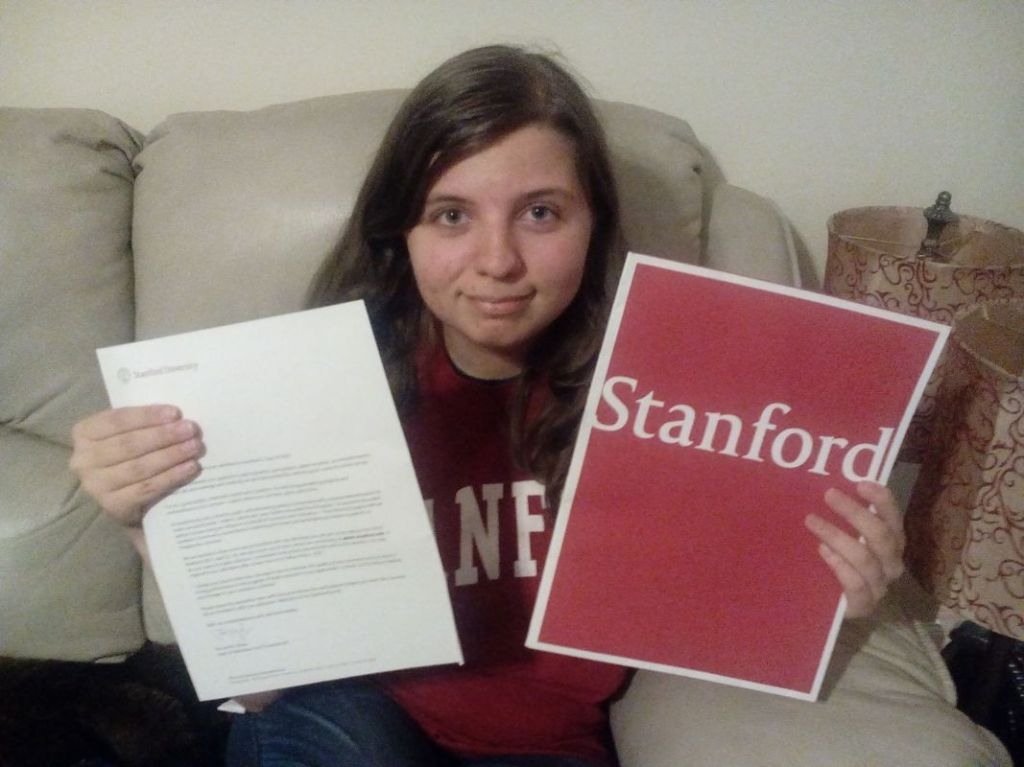
@abylovesblogging: One of the best elite university, Stanford university has accepted you. How do you feel about that?
Megan: It is amazing! Every day that I am on campus I am in awe. I think about how much it took to get here and I think about how hard things used to be and I am still in disbelief that this is my reality now. I am a Stanford student. Sometimes when I am walking around campus, I feel compelled to touch the buildings and the flowers and the palm trees just so I can confirm that this is real and not a picture, otherwise Stanford still feels too much like a dream.
@abylovesblogging: Where do you see yourself after your studies? What else do you want to achieve?
Megan: I do not know exactly what I want to do. Art and music and books played a big part in my success, as did education, so I know I want to work in one of those fields. Whatever I choose though, I know that I will continue to be an advocate for low income students and for education reform. I want to use my privilege of being at Stanford to be a voice for my community and for other low income students that are otherwise underrepresented. I also want to tell my story more, and I want others to learn whatever they can from it, because I know that inspirational stories were such a big part of me having the hope to continue despite all of the trouble that was going on in my life.
LESSONS FOR LIFE: RESILIENCE, HOPE AND NEVER GIVING UP
@abylovesblogging: Do you believe that, although your homelessness was a hard time, that you have learnt something important for your future life?
Megan: Absolutely. If I had the choice to go back in time and change my circumstances, I woul not change anything. Being homeless expanded my perception of happiness. Being homeless acquainted me with the secret reserve of strength in my heart that I had never accessed before, but was there when I needed it. That second wind of resilience, that I think all humans have- that piece inside of us all that is determined to continue no matter what.
@abylovesblogging: Which advice would you give people at your age who want to achieve their dreams?
Megan: It may sound cheesy, but nothing is impossible. You can do anything you set your mind to. The biggest impediments to our dreams are not our resources or talents, but our own perceptions of our limits. If you doubt yourself, you are holding yourself back. So never give up, and never stop fighting.
Megan: I would wish for poverty to end. I would wish for everyone to have two loving parents. And lastly I would ask for my family to have a house of our own.
Since this interview, some time has passed — but Megan has stayed. Even though we have never met in person, something meaningful grew out of this conversation: a genuine connection. I am grateful to be able to call Megan my “friend from afar.”
Her story continues to remind me how much strength, courage, and hope can live within a person — even when circumstances seem to work against them. Megan inspires me not only through what she has achieved, but through the way she moves through life: reflective, compassionate, and deeply hopeful for others.
Her journey is proof that where you come from does not define where you are going — and that even from the darkest chapters, something truly beautiful can grow. I hope Megan’s story touches you as deeply as it has touched me and gives you a piece of the courage she continues to give me to this day.
Kathy Parker, a writer from a small seaside village in rural South Australia, has a remarkable gift for touching hearts through her words. Known for her deeply personal poems and texts, she explores themes of healing, self-discovery, and the complexities of human relationships. In this exclusive interview, Kathy shares an intimate look into her journey as a writer, her sources of inspiration, and the challenges she faces in bringing her words to life. Enjoy!
@abylovesblogging: First of all, thank you for confirming my interview request. I am very glad. Before we start, please introduce yourself to my followers…
KP:Hi, and thanks for having me here My name is Kathy Parker and I am a writer from a little seaside village in rural South Australia. I am a lover of beautiful words, the ocean, mountains, rivers, camping, hiking – actually, pretty much anything to do with being outdoors in nature! I drink cheap red wine so I can afford expensive gin, am a trumpet player by trade but these days spend more time with the guitar, am a total empath, wannabe yogi, paleo chick who loves to grow her own veggies, and I have dreams to one day travel my beautiful country with nothing but a van, guitar and surfboard. And all of that sounds weirdly like a dating profile!! Ha!! It is not, I promise!!
@abylovesblogging: Kathy, the reason I have chosen you to be my interview partner is because you inspire me through your poems and texts. Tell us more about your job as a writer …
KP: Firstly, the fact that you are inspired through my writing is the exact reason I write. I don not write because I have dreams of being rich and famous, I write because the passion of my heart is to bring connection, understanding, healing and hope to women all around the world. To make them feel less alone. To empower women to know their worth, and go forth and change the world. It sounds glamorous. The reality is, it is not. It is hard work, lonely work. It is forcing myself to uncover the places in my own heart I would rather keep buried. It can be brutal at times, unforgiving. It’s many hours of solitude, of being alone with nothing but my own mind. It can make me impossible to live with when I’m in the throes of the creative process. I mostly never get paid, and nobody will ever see the hours of work that go into each piece I write. However, I wouldn’t change a thing. This is my passion, the desire of my heart, the thing that matters most to me. Even on the worst days, there is still nothing else in this world I would rather be doing. The beauty of writing for me is the ability to work around my family and the demands of life that come with that. I don not necessarily have set writing hours, it’s something I fit in as best I can – some weeks that can look like days where there are no other priorities and I can write during normal working hours, other weeks it can look like cramming time into 5am starts or late nights when everyone else is asleep. Lifestyle matters to me and I would always rather write less and have time with my family, time for walks on the beach and morning surfs and yoga and to enjoy a cup of tea in the afternoon sunshine with a book and be available for my family when they need me, and I’m extremely thankful to be able to do what I love around the simplicity of the lifestyle I love.
@abylovesblogging: When did you start writing and what was the reason for that ?
KP:I have always been a writer, and have written on and off since high school, but it took me decades to give myself permission to own it and to find the courage to step into it. However, I officially started writing in 2015 when I began my own blog, This Girl Unraveled. I had just been through some extremely difficult years of my life that culminated in emotional breakdown and physical breakdown as I suffered through ME/CFS. It was about the time I was diagnosed with Complex PTSD, and was forced to deal with a traumatic past I had been covering up with many layers of perfectionism. Those layers soon began to unravel, hence the name of my blog, and as I began to work through my pain and journey toward healing, I began to write as a way of processing all I was thinking and feeling in the hope my words would bring healing to other women who were going through similar issues.
@abylovesblogging: Most of your texts are about breakups, why did you chose to write about this issue ?
KP: More of my recent texts centre around this theme but I tend to write about anything and everything to do with relationships as I feel they are core to the human condition. What I write about at any given time is often what I am thinking about – either from my own experience or from books I am reading or conversations I have with people which trigger themes in me that I ponder and explore more in my writing. Also, much of what I write is with the intention of facing pain square in the eye, and breakups are certainly one universal pain we have all suffered through at one time or another in our lives.
KP:Much of my inspiration comes from experience, as I believe the best writing comes from the deepest places within us, and so I try not to shy away from the things that are hard to write about as I believe they will be the things that impact the hearts of others the most. However, author Dani Shapiro talks about having the ability to put ourselves in the shoes of others – and so being an empathetic person allows me to listen to the hearts of other people and put their pain into words that bring justice to how they feel, so much of what I write comes from the hearts of others who share their pain with me. But I also find inspiration in beautiful poetry, books that rip my heart wide open, and I’m a quote fanatic and spend far too many hours scrolling Insta and Tumblr and taking screen shots of quotes to go back and read again and again – my phone is full of them!! But I’m definitely most inspired to write when alone in nature – the more wild and rugged, the better, it definitely brings out the best creativity in me.
@abylovesblogging: Some of your texts have been published on “The Elephant Journal”, that means a lot of people are reading your poems, what exactly does it mean to ?
KP: Elephant Journal has been a wonderful platform for my writing, and I have been honoured to have been featured there, and thankful for the love and support shown from readers all over the world. However, I have chosen to step away from there for the time being, and from other platforms I have been writing from, as I feel at this point in my career it’s more important for me to be building my own readership, and not the readership of other journals.
@abylovesblogging: Which issues would you like to write about in the near future? And why ?
KP: There a lot of issues I currently write of that I would like to delve a little deeper into that I have been too scared to push the boundaries of up until now. I spent many years without a voice, and now that I have found it, in many ways I am still learning to use it, and to understand the power of it. I don not believe in using a shock factor when writing, but I do believe if my writing makes people uncomfortable at times that is not necessarily a bad thing. In saying that, one area of my life I have not written much about has been my faith, and my journey from being religious to becoming spiritual, and what that has meant for me – the ways religion can damage an already damaged person and be counter-productive to their journey to healing and freedom. This is something I would like to explore more.
@abylovesblogging: What are your wishes for your future? What do you want to achieve ?
KP: The thing I have loved most about my journey as a writer so far is that it has been an entirely organic process. I have never really known where it was going to take me, I started to write because the words began to mean everything and I could no longer not write, so there was never any goals or targets or achievements aimed for as such, just a desire to write. I have loved my journey and the unknowns and the surprises. To be where I am today still amazes me, but mostly, I am amazed and inspired by how my words reach the hearts of people all over the world, and as long as this remains the core of my achievements, then that’s all that really matters to me. I do have a couple of projects I am working on at the moment however, and I hope to see these come to fruition in the next 12 months – both a published collection of my poetry/prose and also to finish writing my first full-length novel and see that to publication also. But really, I just hope to keep doing what I am doing because writing is where my joy and passion come from. It’s like the quote by Howard Thurman – “Don’t ask what the world needs. Ask what makes you come alive, and go do it. Because what the world needs is people who have come alive.” Regardless of outcome or achievement, I am just happiest and contributing best to the world when I am writing.
@abylovesblogging: Could you imagine to write a book, if yes, which topic would it be about?
KP: Yes! As I said earlier, I am currently in the process of writing my first book – a literary fiction novel that addresses the themes of childhood abuse and trauma, domestic violence, relational wounds, generational cycles, and how we overcome, heal and find the way back to our own hearts. It is a difficult book to write, and while not a memoir, much of it comes from a deep place of my own pain which makes the process slow and careful – it is not the kind of book you can smash out in a few months, but one which I believe will be worth every amount of bloodshed it will have taken to get the words on the page.
@abylovesblogging: Do you pay attention to rhythm or epic to make the importance more “visible”?
KP: I am quite new to writing poetry, and when I first began to write poems I did not pay a lot of attention to the structure of how I wrote, just placed words on lines and hoped for the best! Since then I have studied hundreds of poems, traditional and contemporary, and now pay more attention to the structure of what I write. I am probably most drawn to alignment, I have this thing where I like to see the sentences line up evenly, probably a throw back from my perfectionist days. I never rhyme in my poems, not because I don not like poems that rhyme but because it takes me back to many, many lame poetry efforts in my high school days that make me shudder at how bad they were. I don not always write in verses but when I do it matters to me that each verse has the same structure, same amount of lines and equal rhythm. I still love what Picasso says though, “Learn the rules like a pro so you can break them like an artist” and some of my favourite poems are still my earliest ones where rules didn’t exist for me.
@abylovesblogging: Do you have favorite poets and writers ? If yes, who are they ?
KP:So many! Most of my favourite authors are Australian women who are excelling in the area of Literary Fiction. My favourite poets are a little more widespread however, and most fall in the category of Modern or Contemporary – ummmm, just to think of a few favourites from the top of my head – Clementine Von Radics, RM Drake, Rupi Kaur, Lang Leav, Alfa, Atticus, Nausicaa Twila, Sarah Jean Bowers, Cindy Cherie, Beau Taplin, Nicole Lyons, Stephanie Bennett-Henry, Zachry K Douglas, Michael Xavier, Becca Lee, Nikita Gill, JM Storm, J Raymond… there are so many amazing writers out there!
@abylovesblogging: Unfortunately, our interview is almost over, but here is last question: where can my followers find you ?
KP:This Girl Unraveled: www.kathyparker.com.au Facebook: https://www.facebook.com/kathyparkerwriter/ Twitter/X: @kathyparker2206 Insta: @kathyparkerwriter Tumblr: kathyparkerwriter.tumblr.com You can also find articles I have written at Elephant Journal, Huffpost Australia, The Mighty, The Minds Journal, Thought Catalog, and Lessons Learned In Life Inc
Note: This interview was originally conducted on July 18, 2017, and is being republished with the permission of Kathy Parker.
What does it mean to be the first? To walk into rooms where no one looks like you, to lead where others only followed, and to speak truths that are too often silenced? Florence Brokowski-Shekete has done just that — and more. As the first Black female school superintendent in Germany, Florence’s journey is not just about personal success; it’s about challenging systems, embracing identity, and refusing to let injustice go unspoken. In this candid and moving interview, Florence opens up about her childhood between cultures, the quiet strength of motherhood, and the battles she’s fought — and still fights — in a society that too often turns a blind eye to its own biases. From painful discrimination to empowering leadership, she shares stories that are as raw as they are inspiring. Curious what drives a woman who says she wants to be “the Oprah Winfrey of Germany”? Keep reading — this is not a story you want to miss.
@abylovesblogging: Please briefly introduce yourself – what do you do, what are your interests?
Florence: First of all, thank you for meeting with me today. My name is Florence Brokowski-Shekete, and I’m an educator by profession. I studied to become a teacher, worked as a teacher and principal, and today I serve as a school supervision director in a public school office. My parents came from Nigeria to Germany in the mid-1960s. I was born in Hamburg and grew up with a white German foster family. When my parents returned to Nigeria, I was nine years old – and I had to go with them. That was a huge change for me, as I didn’t feel comfortable in Nigeria because I missed my mom terribly and didn’t have a close bond with my biological parents, since I hadn’t grown up with them. Luckily, after three and a half years, I was able to return to Germany and live with my mom again. I grew up in Buxtehude in northern Germany. But even then, I noticed that due to my Nigerian passport, many things were denied to me, and I constantly faced resistance and problems. Later, my mom adopted me as an adult, which allowed me to get a German passport and study to become a teacher. I followed my professional path, which wasn’t always easy and had its rough patches. I wasn’t walking around thinking that life was hard because I’m Black – not at all. But whether you want to or not, there are moments when you realize you’re facing resistance. Of course, people always asked where I came from and what my background was. When I shared my story, they often told me I should write a book – and that’s how it came about that I published my autobiography in 2020, followed by the book “Raus aus den Schubladen! – Meine Gespräche mit Schwarzen Deutschen” in 2022, and in 2024, the first season of my podcast was released as a book. The idea for the podcast came to me in 2022 – I wanted to talk about everyday racist situations. I brought in a white person for the dialogue because I thought it would make a good dynamic – which worked well for six seasons.
@abylovesblogging: What exactly was the problem in Nigeria? Can you give me some examples?
Florence: Yes. In Nigeria, I was considered “the white one.” Because I had been raised in a completely different culture, I was brought up white. The kids there called me that too – in Nigeria, there’s a term, “Oibo Pepe,” which is used for white people, and that’s what they called me. But I don’t know if that was the main reason. The main reason was that I missed my mom. If I had gone somewhere and she had come with me, it wouldn’t have been a problem at all. I love traveling and being abroad. I’m very curious and enjoy exploring other cultures. But in Nigeria, I was a child missing her mom, and that’s why I didn’t feel comfortable there. My biological parents were strangers to me. They didn’t have the kind of love for children that I knew.
Florence: Definitely. I do think there’s a cultural aspect. When I compare it: my white mom was born in 1924, and my parents were 20 years younger than her. You could say, if it were about generational differences, my mom would have been the one who was a bit colder and less loving. But I think it has something to do with culture. I’ve heard the same from others – that, compared to Germany or to what we generally know, the way parents express love there can feel cold. I always said, once a child can walk, it can work – that’s the feeling I had in Nigeria. If you can’t walk yet, you get carried on the back, and that’s okay, but once you can walk, you’re expected to be useful. I really missed warmth – maybe it was something specific to my mother.
@abylovesblogging: How did you manage to walk this path despite these experiences? What helped you?
Florence: I came to my mom when I was two, after being in various foster homes. I’d say, luckily, my biological parents had very little influence on my upbringing. Because I came to my mom so young and was showered with love – I really had everything a small child needs. My mom didn’t have much money, and my parents eventually stopped giving her any to support me. She took it all upon herself. And with the little money she had, she tried everything to give me a nice childhood. […] My first Christmas – I had come to her in February – she made a dollhouse out of a shoebox: an apartment with two little dolls. She didn’t even know if I would play with it or not. […] She did it with so much love – and that was my life’s luck. Those seven years gave me so much love for life that the three years I spent in Nigeria had barely any impact on me. [….] Compared to my sister, I got off lightly. But my parents had a different method, especially my mother. When they thought I needed to be punished, they’d say I wasn’t allowed to write to Germany anymore and wouldn’t get my letters. A teacher who supported me helped me return to Germany. Those 3½ years definitely didn’t leave me completely unscathed. For the first two years afterward, I needed a lot of time to develop basic trust in people. But I always say, everyone carries their own little burden – and those seven years with my mom gave me a healthy self-image. So, I didn’t miss the love of my biological parents, because I had a mom who loved me […].
Florence: Not in a negative way at all, really not. My mom showed me what it’s like to be loved as a child. And I realized very early on (and that might sound really stupid now, but I don’t know why I wanted that as a child), but whenever we went to the zoo (let’s skip the discussion about whether zoos are good or not, but back then it was still a thing. In Hamburg there’s a zoo/animal park and in the ape house there were always the little baby chimpanzees, and they were always diapered like children and so on). And for some reason, as a child I always said that I wanted a little monkey. Maybe because they looked so small and cute. And then I was showered with stuffed monkeys and always cried because I wanted a real little monkey. I think I just wanted something I could love and give love to. When I had my son and I heard in the maternity class that you have to get used to the child once it’s there – and I thought: What nonsense! I already loved my child… I loved this little being before he was even born. So thank God those 3½ years with my parents had no influence on how I treated my baby. I’d say those 3½ years in Nigeria, regardless of my parents, made me a multicultural person. That wasn’t so bad, because otherwise I wouldn’t have any connection to my skin color and my Blackness, so from that perspective it was good. I really realized what it’s like to live in Nigeria as a Black person and be seen as white. […].
@abylovesblogging:What challenges do you see in the future in Germany regarding racism, and how can they be overcome?
Florence: The future is a good question. I do see that there are many people in our society who are open and say they don’t know much about everyday racism but want to learn and be open and do better. They are aware that there are everyday racist and discriminatory situations. People who consciously say that everyone has the same human rights, and we want to do things differently. You can also see that now: People are going out and demonstrating for democracy. But I also see the people – and I see them in my work environment (though that’s probably a coincidence, because my work environment also reflects society… so I think it’s a societal phenomenon) – who say they’re fed up with the whole diversity debate. People who, like the Tradwives, are regressing and becoming conservative again – I get the impression there are people who are completely conservative. They don’t even want to touch the topic of diversity. I work in an environment where the topic „diversity“has not deeply thought of. There are still people who can‘t connect to this topic. I had predicted earlier that we need diversity management. At first, I thought “then I’ll just leave it”, but then I thought “No”. I was specifically appointed by the Minister of Education in Baden-Württemberg to the state school advisory board for this topic, and then I can’t just say in my work environment: “Oh, never mind, it’s not that bad.”
If the leadership of a company, institution, or organization doesn’t address such topics, and no one says “Wait a minute,” then it gets lost. And if the leadership rolls their eyes at the topic, then the people affected feel excluded – and that just can’t happen in 2025 anymore. I’m no longer willing to just accept it. That’s what I observe here and there, but I believe we people who care about this – and that’s not just Black people, but people who are gay, have a different gender identity, etc. – we have to speak out. That doesn’t mean I know all aspects of diversity… maybe I know them on a meta level. I don’t have to like everything, but that’s not the point. The point isn’t to say: “Oh, having a migration background is okay, but if someone is gay, their feelings aren’t valid.” That’s not it. Human rights mean that everyone must be accepted in their individuality, whether I like it or not. That’s the kind of topic where I feel we’re not yet at a point where acceptance is strong.
@abylovesblogging: How can you deal with this fear? Do you have any tips?
Florence: That’s a tough question, because kids and teenagers spend so much time on the internet and on social media. They’re exposed to so many images, “realities”, and truths, that I’m sometimes not surprised if they struggle to deal with it. I’d say home should always be the source where I can express my fears, worries, and concerns. Home or with loved ones, and of course school should also be a place – but first and foremost, home. For example, when the war in Ukraine started, it turned out that many Black students (which I didn’t even know before) were unable to leave Ukraine. I didn’t know there were so many Black students there. The fact that they couldn’t get out properly – that’s something deeply shocking. There were probably teens who saw that and thought, “What if I had been there – would I have been just as powerless?” So it’s good to talk with parents and look at how situations were resolved. In some areas, return tickets were even given away – I meet people from that party and weirdly enough, they’re sometimes super friendly to me. I have no idea why. One time, I was in a meeting and afterward, one of them passed by me and wished me a nice day – like it was super important to him. And I just thought, “Huh? What do you want from me?” I just thought, it’s already enough that I have to breathe the same air as this person. But that’s how they try to instil fear. The more you engage with it, the more it affects you.
@abylovesblogging: Are there moments that especially shaped you? If so, which ones?
Florence: For example, when I did my second state examination, I felt discriminated against by the examination board and the head of the seminar. The way she spoke to me… she handed me my certificate and said, “Your competence is worth that of a cleaning lady.” Then the person who supervised my seminar paper, the one I followed for guidance, was later criticized – and it affected my grade. I confronted him, but he wouldn’t even look at me. It was all very unfair. I always had to deliver more than everyone else. I spent two years at a primary school and that was good – no problems with the kids or parents. Then I was self-employed for six years, which was also lovely. Then I went back to teaching at a schoolwhere I had the strange feeling that the male principal doubted my qualifications. But of course, and again I proofed him wrong. I think he had issues with his masculinity. And I’m someone who doesn’t fawn over men like that – I’m professional and do my thing.So when he saw that I was capable, the dynamic changed. Suddenly I was “the teacher”, and when I became a principal, he proudly visited me at the school with flowers like “my teacher is now the principal”. But I had to first prove myself and show that I wouldn’t be treated like that.Then someone at that school cut up my jacket – everyone initially said it must have been kids. But I knew immediately it was a colleague. Years later, another colleague said: “You know, we all knew it wasn’t kids, and we also knew who it was, but we were too scared to say anything.” And in such situations, no one helps. I wrote about it in my book too – the police were involved. One officer told me not to make such a fuss, it was just a jacket. It was all very degrading. My former boss, who hadn’t even read the book, heard that someone told her she’s portrayed as a racist in it and messaged me on Facebook. But I actually portrayed her as someone who supported me in advancing my career. So I replied: 1. She hasn’t read the book. 2. If that’s her only concern, then I’m sorry I phrased it so gently – next time I’ll give different interviews and be more direct. I mean, she asked for it! If she wants it, she can have it. Since then, I’ve blocked her and cut off contact.Those are the situations where I think – it’s not enough that I’ve been harmed, but I’m also expected to protect the perpetrators’ reputation. Then I applied to be a school principal, and there were plenty of people trying to block me. But there was one woman, the then-head of the school authority, and she said she wanted me as a principal and gave me full support. And the guys – mainly men – who tried to block me, had to work with me when I became a school inspector. One of them had to work with me – that really annoyed him. Eventually I had to put him in his place, because he thought he could cross my boundaries. And there’s still one guy who has to work with me to this day. Totally awful, but I think I show him how it’s done. These are the people who think I didn’t know they were against me.
@abylovesblogging: Do you think all of this happened to you because you’re a woman and a PoC?
Florence: Absolutely yes. Last year I faced a situation which clearly showed that my skin colour mattered. If this situation had involved a tall, white, blond, blue-eyed man, people would have also disagreed with the decision, they wouldn’t have dared to play the same games they played with me. I hold that very much against people – and I was asked: “You’re not resentful, are you?” – Yes, I am. I can handle it professionally, because I believe you always meet twice in life […] I think it happened because I’m a woman and a PoC – that’s where intersectionality comes in.
@abylovesblogging: How do you experience this? Do you notice an “elbow mentality” among Black women in the community?
Florence: […] I remember this from my university days. At the university I attended, there was a Black woman with a white parent who ignored me, like I didn’t exist. Only when I had braids did she suddenly approach me and talk about how great the braids looked and where I got them done. I hear from time to time that there is something like jealousy in the Black community. Like I said, I don’t feel it personally. On social media, sometimes Black people write to me asking why I talk to white people and that I’m too white. But I just ignore that. If people have a problem with it, then they can unfollow me. But because of things like that, I try to live slightly different. My son also wants me to help other BiPocs. I get a lot of requests from young Black women, like your request (she meant mine), and when I tell my son about it, he says, “You’re going to do that, right?” or “That’s so nice that you’re doing that.” For me, that’s a given. […] David Bowie’s wife once said in an interview something like: I opened a lot of doors, and I always make sure that the door stays open for the people who come after me. I really like that. […] That’s why I love supporting young Black women/men.
My first wish would be that my son and I stay healthy and that nothing happens to us – especially him. That nothing happens to him and that he’s happy and content. That’s the most important thing to me. That we can grow old together in the sense that he has a mom who ages but stays healthy.
That society becomes more content again and that politics develops a good instinct to help people feel safe. Because right now, I feel that politicians lack the right instinct to ensure that people living in this country respect it. It shouldn’t be that we constantly experience situations like we have recently. That has nothing to do with whether someone has a migration background or not. If you live in this country, I expect you to have respect for it. It’s like in a family or a class: I can have a certain loving strictness, which means I show the children I like and respect them, but there’s a boundary – and if someone crosses it, there are consequences. That’s what I wish, because if it doesn’t happen, we might face political consequences tomorrow […].
My third wish – which I’ve had for a long time – is to have my own talk show. I have my talk format “SCHWARZWÄLDER & BUTTERKUCHEN” because I love it – I love talking. […] That would still be a wish: I want to become the Oprah Winfrey of Germany. We have some well known hosts and I really like them.. I was on the NDR talk show twice, and I really love all of them.. I’d love to be the Oprah Winfrey of Germany, because I think I’d be good at it. My talks are also on YouTube – they’re not sensationalistic, but solid. I think the German TV program could really use a solid talk show again.



 abylovesblogging.com