
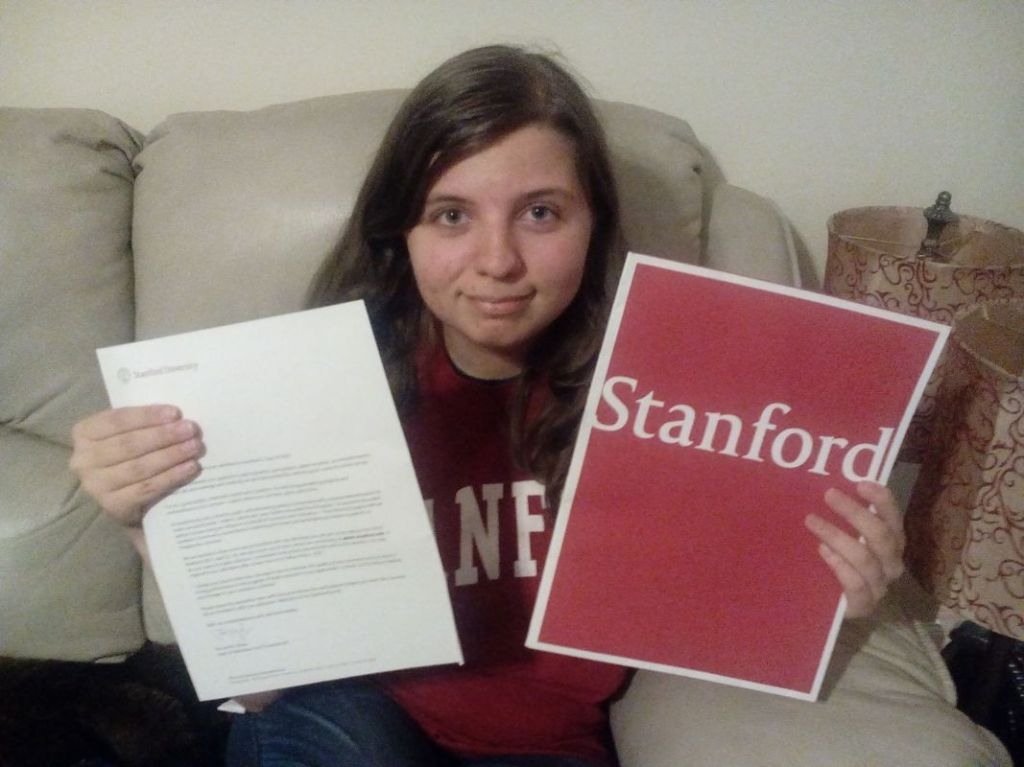
I first came across Megan Faircloth’s story around 2017 when I watched a TV show. I immediately knew that I wanted to share her story on my blog. Since our interview, I am grateful to call Megan my “friend from afar“. Even though we have never met in person, we have stayed in touch ever since. Please read this incredible story and share it as much as you can.
GROWING UP IN POVERTY: WHEN HOME WAS NEVER SECURE
@abylovesblogging: Please, tell us about what you and your family had been through because of your homelessness….
Megan: My family began to have financial struggles during my middle school years. We were evicted from several homes and I moved schools a lot. Finally, in my eighth grade year, we were evicted from another house and we had nowhere else to go, so we moved into an abandoned house in Wendell, North Carolina. My father knew the owner of the house and the owner of the house owed him money, so the owner allowed us to stay there, though the house was pretty uninhabitable. There was a hole in the roof of the kitchen where water leaked in every time it rained. There was also a hole in the floor in the room where me and my sisters slept. There was no heat or air conditioning in the house. And even though my parents did not have to pay rent, we continued to struggle financially. We could not afford the water bill, so the house did not have running water most of the time, and we often went without electricity. […] Then tragedy struck. The owner of the home died, and his wife did not want us living in the abandoned house anymore, so we were evicted. We were only given 24 hours notice before we had to leave the property, as the owner’s wife lied to the police about how long we had been living in the house (In America, the longer you are living in the house, the longer you are given to collect your stuff and leave. Legally, we should have been given a month to pack and leave, but the owner’s wife told the authorities that we had only been living there a week so that she could evict us quickly). As a result, we lost most of our belongings. I made off with my bookbag and my textbooks, a bag of my clothes, and a box of my journals- which to this day are my most prized possession. […] I was taking 4 college courses when most students at my school only took one or two because the classes were so difficult.The counselor at my school had warned me at the beginning of the school year that my course load would be too difficult, but I told her I wanted to do it no matter how hard it was. Even before becoming homeless, I was determined to get out of poverty through my education.
The same week of the eviction, my mother was admitted to the hospital and diagnosed with an ovarian tumor. We did not find out until two months later that it was not cancer, and so for a long time me and my sisters were very worried. The same week of the eviction and my mother’s diagnosis, my father abandoned us. He was tired of having to be a father and having a family and thought he would have an easier time finding a place to live if he were on his own. […] At one point, I was so exhausted, and I was getting sick often and missing a lot of days at school, so my grades became very bad. I was failing my college biology course, I had a D in PreCalculus, and I had a C in my college statistics class. At this point, I honestly thought it was over. With grades like this, I was not going to get into college. I was ready to give up and quit school. Homelessness had taken away my home and my belongings and now I thought it was going to take away my future.
“I WILL SURVIVE“: FINDING STRENGTH TROUGH MUSIC AND WORDS
[…] But then I decided that I was not going to give up. My education meant too much to me, and I was determined that no person or circumstance was going to take it away. I became obsessed with inspirational quotes and song lyrics, including Gloria Gaynor’s “I Will Survive” and quotes from the novel “Unbroken” by Laura Hillenbrand. I wrote all of them on my bookbag to remind me constantly to not give up. I managed to pull my grades up until I had all A’s. While my family was staying in a homeless shelter, I learned that I was the valedictorian of my school. As a result, school became an even greater source of relief for me, an even greater anchor of sanity, binding me with hope and promise to the future I had invented for myself in my mind. A future where food insecurity, motels, and abandonment ceased to exist.
School was a place of opportunity and hope
Megan Faircloth
@abylovesblogging: How long have you been homeless and how tough was it to have a “normal life”?
Megan: I was homeless from November 2015 to October 2016. My family and I now live with other relatives, and my mom is trying to find a job so we can get our own home.
I was always an outcast at school because I was shy and I was made fun of for being poor even before becoming homeless, so I do not think I ever had a normal life. But while I was homeless I did try to make it seem like I was okay in front of my classmates and teachers. I would try to put on a smile in front of them. However, to some degree I was genuinely happy at school. I tried to look on the bright side. School was a place of opportunity and hope.
It was not always easy though. One time I could not hide how I was feeling and I broke down and started crying during class. No one really noticed and I kept taking notes.
@abylovesblogging: When and where did you realize that if you want a change, you got to do something? What exactly did you do?
Megan: The education system in America is not kind to low-income students. Schools in low income areas are underfunded and low income students often struggle with emotional troubles that are ignored by teachers. Sometimes there are things you need for class, like expensive calculators or internet or textbooks or technology, that low income students can not afford and that schools can not provide. Overall, the teachers and administration do not seem to really understand the struggles that low income students go through and they can not help them, and as a result low income students do not perform well in school or they stop going to school altogether. Because of this, low income students are likely to be poor for all of their lives and the cycle of poverty is reinforced.
For years, I saw some of my friends and peers who are low-income fail in school for issues beyond their control. They came from families like my own. This scared me. I knew if I wanted to succeed that I would have to fight back against the unfair education system. I would have try really, really hard, even when I was hungry or exhausted and even when I did not have what I needed to succeed in school. I also knew that during the college admissions process, I would be competing against students who had way more resources than me, and I would have to also try extra hard to be as successful as them even when they had more.
I think I made the decision that I was going to do well in school before I began my ninth grade year. In middle school, I had heard from somewhere that if you did well in school, colleges would pay your tuition for you. This idea enraptured me. At the time a school like Stanford did not really seem possible to me, but I was going to try my best regardless.
I knew there were going to be a lot of things that were going to happen that would try to deter me, to slow me down, to break me, and I knew that if I let them that I would never get out of poverty. I decided to fight back with all of my might to prove myself and to survive.
FIGHTING AN UNFAIR EDUCATION SYSTEM
@abylovesblogging: How did this part of your life has changed the person you used to be?
Megan: Now I can sleep almost anywhere. I do not complain much anymore. Belongings and material objects are pretty much worthless to me now because I know very well that I can live without them. I am a person who just wants the bare necessities and instead I find happiness in the little things in life that are free- sunshine, family, music. My emotional recovery after being homeless has also had its low points, but therapy has helped.
Being homeless made me grow up a lot and see things in a more holistic way. Worrying about things like, for example, what other people think about me, seems so trivial in comparison to worrying about where you are going to sleep. It has also made me want to be an advocate for other low income students, because the issues that they face are something that is very close to me and very personal, and now I am in a position where I can help others.
@abylovesblogging: Gloria Gaynor’s song “I Will Survive” was the song which gave you hope – how exactly did you feel while hearing the song?
Megan: I heard “I Will Survive” playing on the radio as my mom was driving us to a homeless shelter for the first time. I was feeling very anxious about going to the homeless shelter, but the lyrics, particularly the lines, “Did you think I’d crumble?/Did you think I’d lay down and die?/ Oh no, not I. I will survive!” made me feel strong. It felt like a message to all of the things that I felt were trying to tear me down. I decided to write the lyrics on my bookbag with a sharpie and add them to my collection of inspirational quotes. The quotes gave me courage when I was feeling weak. I felt like I was borrowing courage from other people. I was Gloria Gaynor, I was Louie Zamperini- I could be strong like them.
FROM HOMELESS SHELTER TO VALEDICTORIAN
@abylovesblogging: Your last way out of homelessness was education. You studied many hours in libraries and even outdoors next to your car where your family lived. You finally graduated as valedictorian, which is awesome. Had this been your goal or did your only wanted to get education to change your future?
Megan: I felt like the ultimate underdog in school. I was shy and I was bullied a lot, and I felt like no one in the outside world respected me because I came from a lower class family. The upper-class people we had met before and the rich landlords who had evicted us from their properties had always gone out of their way to make my family feel like trash. But my teachers respected me at school because I worked hard. That was new to me- I always felt like my socioeconomic status was burned into my skin. But my teachers did not care who my parents were or if my family had money. They did not care where I lived or if my clothes were worn out. If I worked hard and was a good student, that was enough for them. I think school was the only place where I had any sense of self worth.
So, my freshman year of high school, I set my sights on becoming my school’s valedictorian because I wanted to prove myself to all of the people who made fun of me and to all of the people who had tried to make me and my family feel like trash. At my school, the valedictorian was a highly competitive and respected position. People who became valedictorians at my school were usually popular and came from wealthier families. It became my dream to surprise everyone by taking the spot. Of course, my education and college admissions chances were much more important to me that the title of valedictorian, but I also wanted to graduate as valedictorian to upset the other wealthier people who wanted to the spot. I wanted people to finally have to respect me.
@abylovesblogging: One of the best elite university, Stanford university has accepted you. How do you feel about that?
Megan: It is amazing! Every day that I am on campus I am in awe. I think about how much it took to get here and I think about how hard things used to be and I am still in disbelief that this is my reality now. I am a Stanford student. Sometimes when I am walking around campus, I feel compelled to touch the buildings and the flowers and the palm trees just so I can confirm that this is real and not a picture, otherwise Stanford still feels too much like a dream.
@abylovesblogging: Where do you see yourself after your studies? What else do you want to achieve?
Megan: I do not know exactly what I want to do. Art and music and books played a big part in my success, as did education, so I know I want to work in one of those fields. Whatever I choose though, I know that I will continue to be an advocate for low income students and for education reform. I want to use my privilege of being at Stanford to be a voice for my community and for other low income students that are otherwise underrepresented. I also want to tell my story more, and I want others to learn whatever they can from it, because I know that inspirational stories were such a big part of me having the hope to continue despite all of the trouble that was going on in my life.
LESSONS FOR LIFE: RESILIENCE, HOPE AND NEVER GIVING UP
@abylovesblogging: Do you believe that, although your homelessness was a hard time, that you have learnt something important for your future life?
Megan: Absolutely. If I had the choice to go back in time and change my circumstances, I woul not change anything. Being homeless expanded my perception of happiness. Being homeless acquainted me with the secret reserve of strength in my heart that I had never accessed before, but was there when I needed it. That second wind of resilience, that I think all humans have- that piece inside of us all that is determined to continue no matter what.
@abylovesblogging: Which advice would you give people at your age who want to achieve their dreams?
Megan: It may sound cheesy, but nothing is impossible. You can do anything you set your mind to. The biggest impediments to our dreams are not our resources or talents, but our own perceptions of our limits. If you doubt yourself, you are holding yourself back. So never give up, and never stop fighting.
@abylovesblogging: If you had 3 wishes free, what would you wish?
Megan: I would wish for poverty to end. I would wish for everyone to have two loving parents. And lastly I would ask for my family to have a house of our own.
Since this interview, some time has passed — but Megan has stayed. Even though we have never met in person, something meaningful grew out of this conversation: a genuine connection. I am grateful to be able to call Megan my “friend from afar.”
Her story continues to remind me how much strength, courage, and hope can live within a person — even when circumstances seem to work against them. Megan inspires me not only through what she has achieved, but through the way she moves through life: reflective, compassionate, and deeply hopeful for others.
Her journey is proof that where you come from does not define where you are going — and that even from the darkest chapters, something truly beautiful can grow. I hope Megan’s story touches you as deeply as it has touched me and gives you a piece of the courage she continues to give me to this day.
 abylovesblogging.com
One thought on “MEGAN FAIRCLOTH’S STORY: FROM HOMELESSNESS TO STANFORD UNIVERSITY”